Privacy trees offer a beautiful, natural alternative to fences and walls, screening unwanted views while adding greenery, shade, and even wildlife habitat to a property. Choosing the right privacy trees involves considering growth rate, mature size, climate suitability, and maintenance needs to ensure a lasting, effective screen. This guide covers twenty ideas and considerations for selecting and planting privacy trees, from evergreen classics to fast-growing options and long-term care strategies.
1. Understand What Makes a Good Privacy Tree
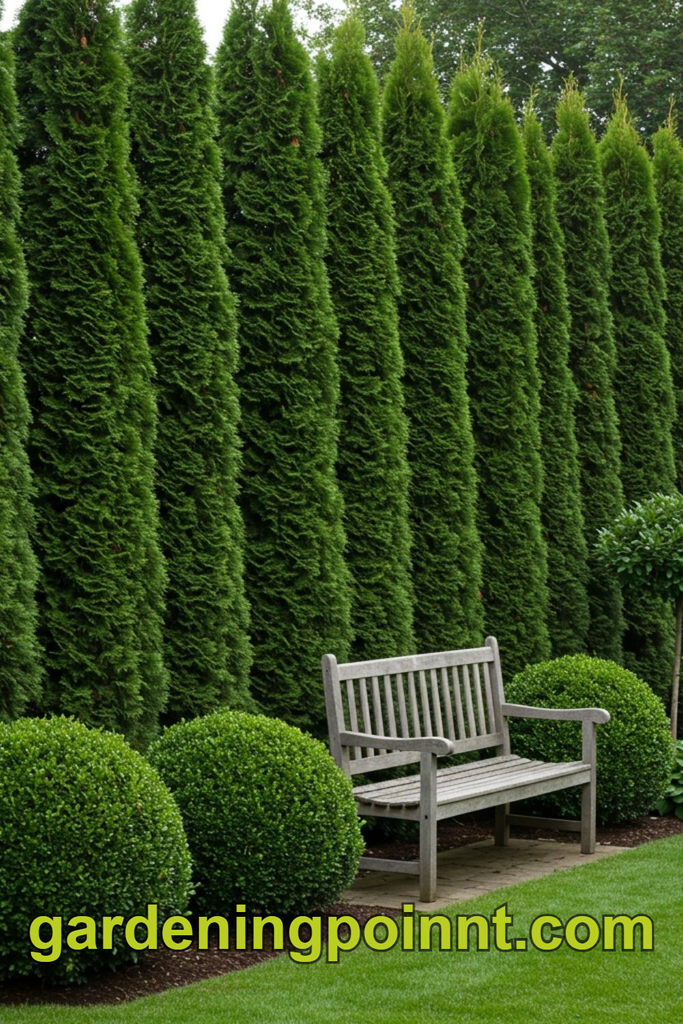
Not every tree is well suited to creating an effective privacy screen. The best privacy trees typically combine dense, year-round foliage, a naturally full growth habit from top to bottom, and a manageable mature size appropriate for the available space. Evergreen trees are generally preferred for privacy purposes since they maintain their screening effect throughout the year, while deciduous trees lose their leaves in fall and winter, reducing privacy exactly when neighboring windows may be more frequently lit and visible.
2. Consider Your Climate Zone Before Choosing a Species
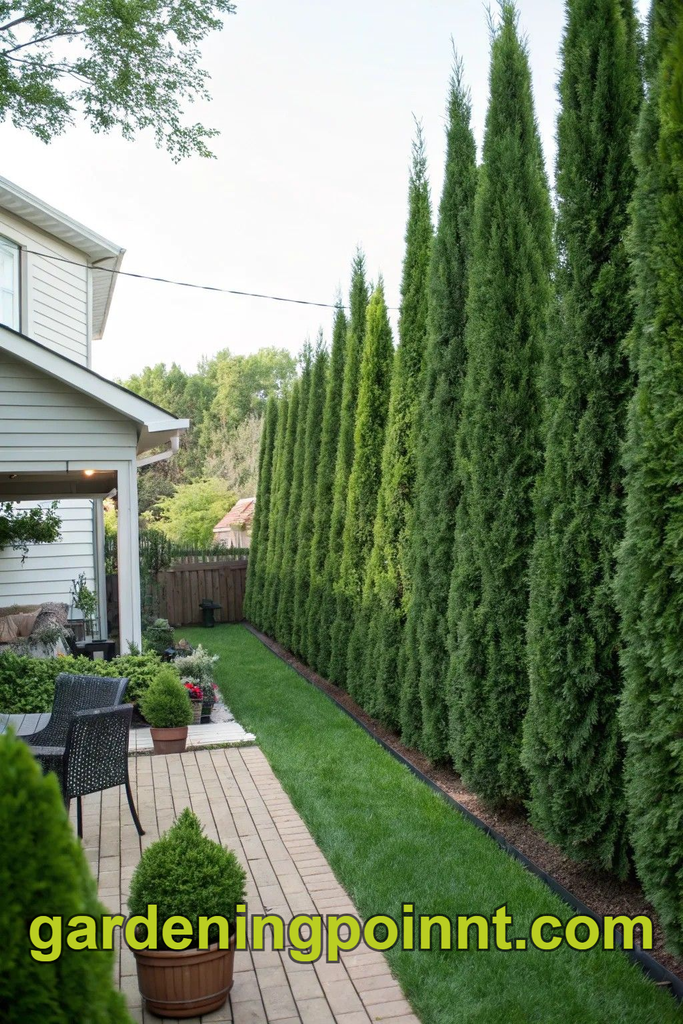
Successful privacy tree selection begins with choosing species well suited to your local climate and hardiness zone, since a tree that struggles with local temperature extremes, humidity levels, or soil conditions will never develop into the dense, healthy screen needed for effective privacy. Consulting a regional planting guide or a local nursery can help narrow down which privacy tree species are most likely to thrive in your specific area. Choosing native or well-adapted species also generally results in lower long-term maintenance requirements.
3. Emerald Green Arborvitae for Classic Narrow Screening
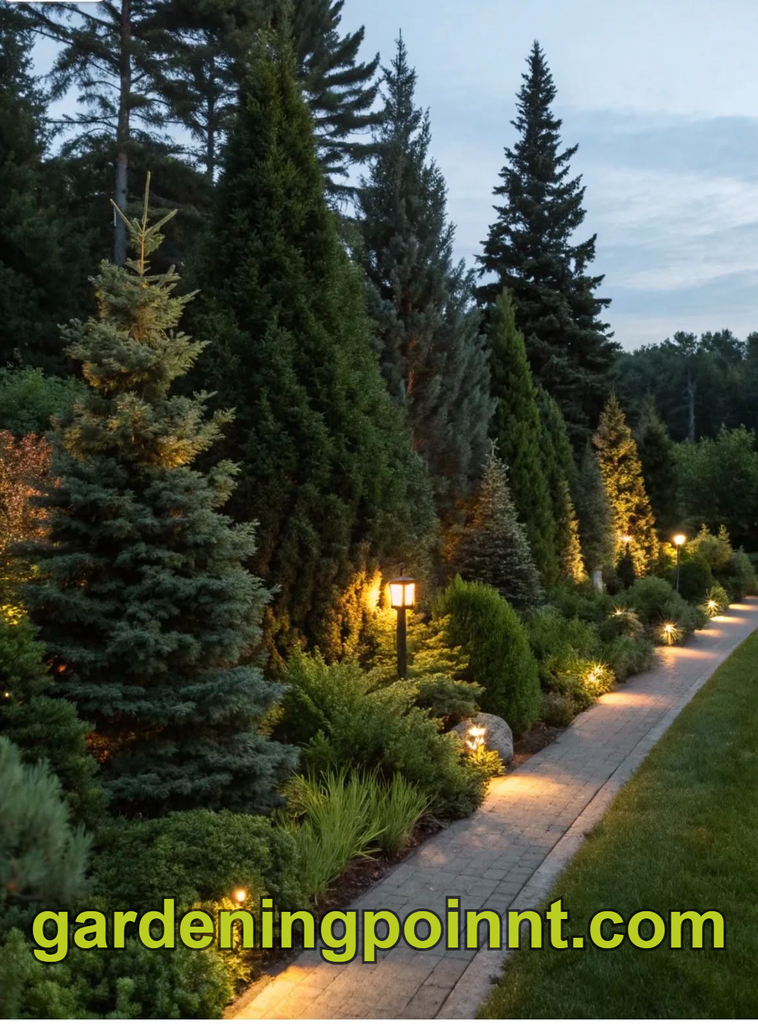
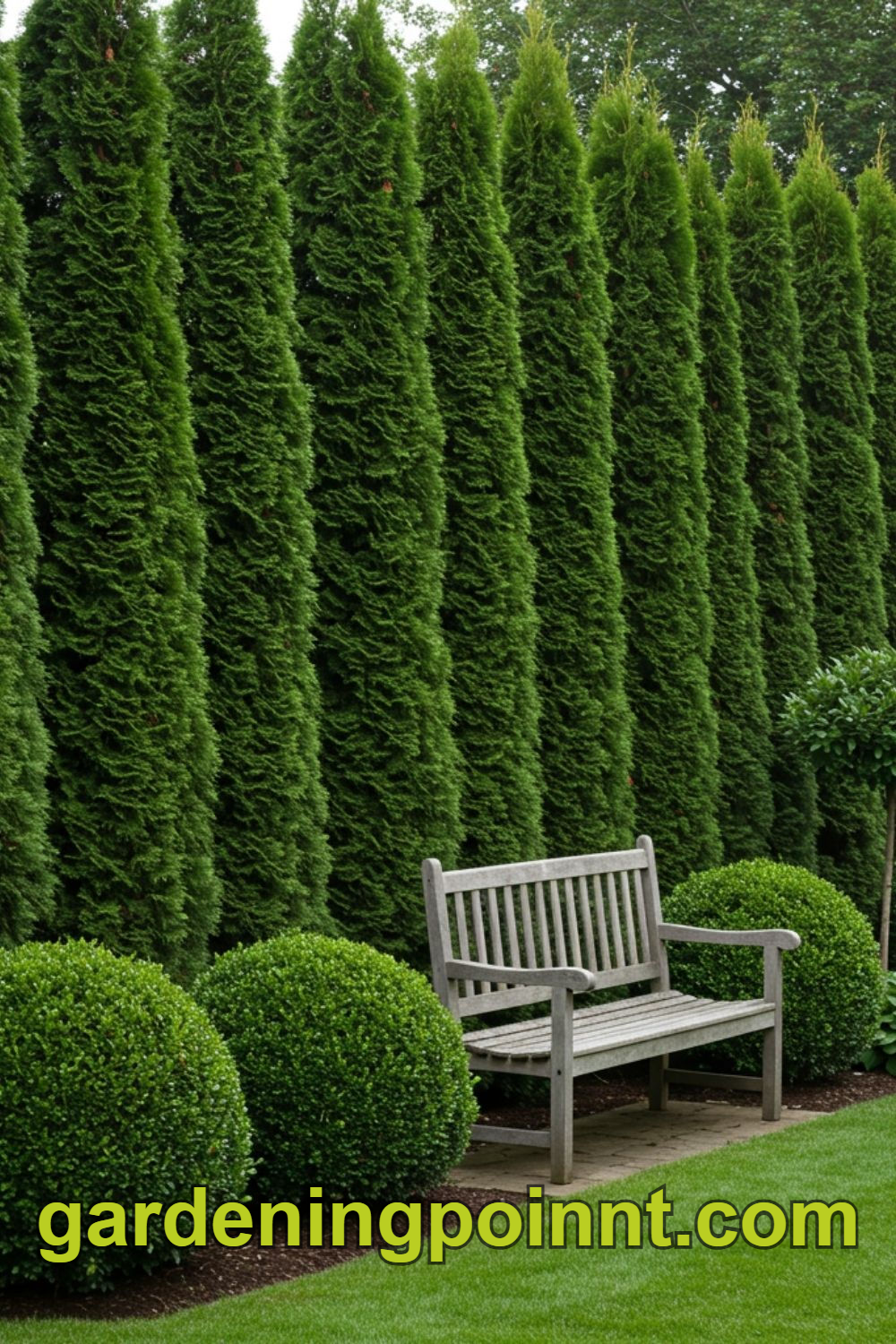
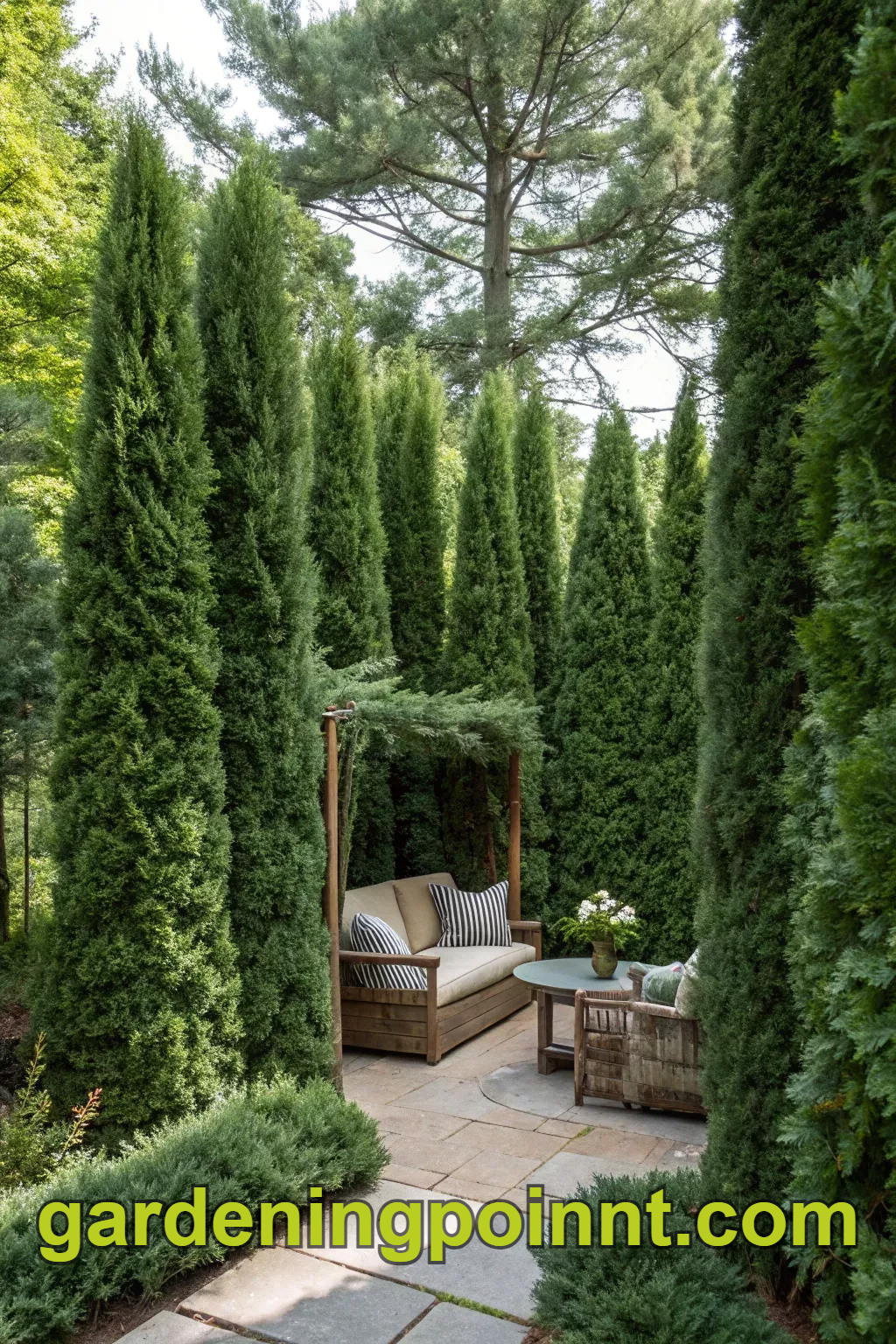
Emerald Green Arborvitae has become one of the most popular privacy tree choices due to its narrow, columnar growth habit, making it ideal for properties with limited width for a screening row. This evergreen conifer maintains dense, rich green foliage year-round and typically grows twelve to fourteen feet tall while remaining only three to four feet wide at maturity. Its manageable size and slower growth rate compared to some other arborvitae varieties make it a popular low-maintenance choice for residential privacy screens.
4. Green Giant Arborvitae for Fast-Growing Coverage
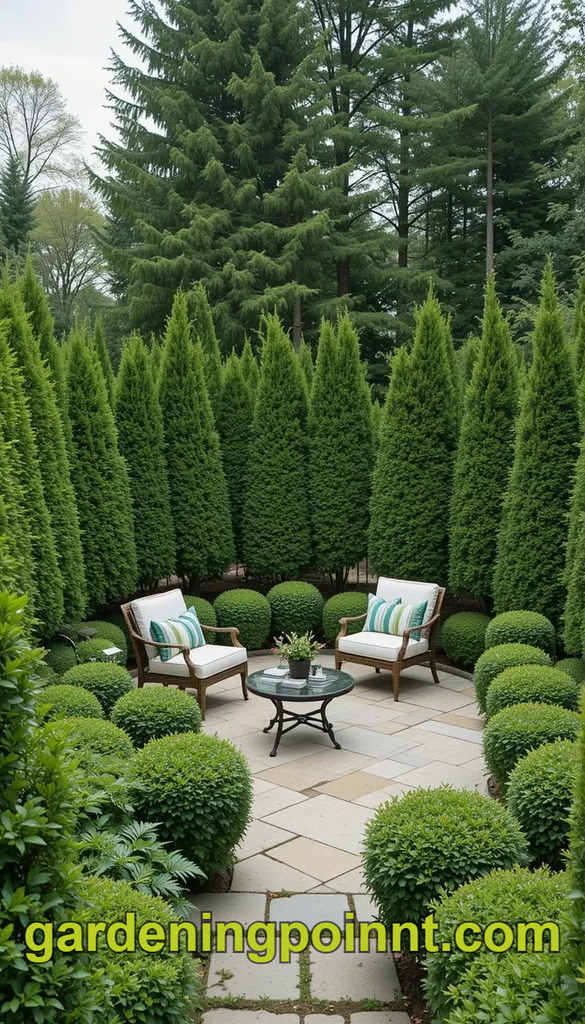
For those wanting a fast-growing privacy screen without waiting many years for full coverage, Green Giant Arborvitae is among the quickest-growing options available, often adding three or more feet of height annually under good conditions. This vigorous evergreen can reach heights of forty to sixty feet at maturity, making it better suited to larger properties with ample space rather than small urban lots. Its rapid growth rate and strong resistance to common arborvitae pests have made it a favorite among landscapers for large-scale privacy projects.
5. Leyland Cypress for Rapid, Dense Screening
Leyland Cypress is another fast-growing evergreen frequently chosen for privacy screening, capable of growing three to four feet per year and reaching heights of forty feet or more at maturity. Its dense, feathery foliage creates an effective visual barrier relatively quickly compared to slower-growing alternatives. However, Leyland Cypress can be susceptible to certain fungal diseases in humid climates, making proper spacing and airflow between trees an important consideration when planting a row for privacy.
6. Italian Cypress for a Formal, Vertical Statement
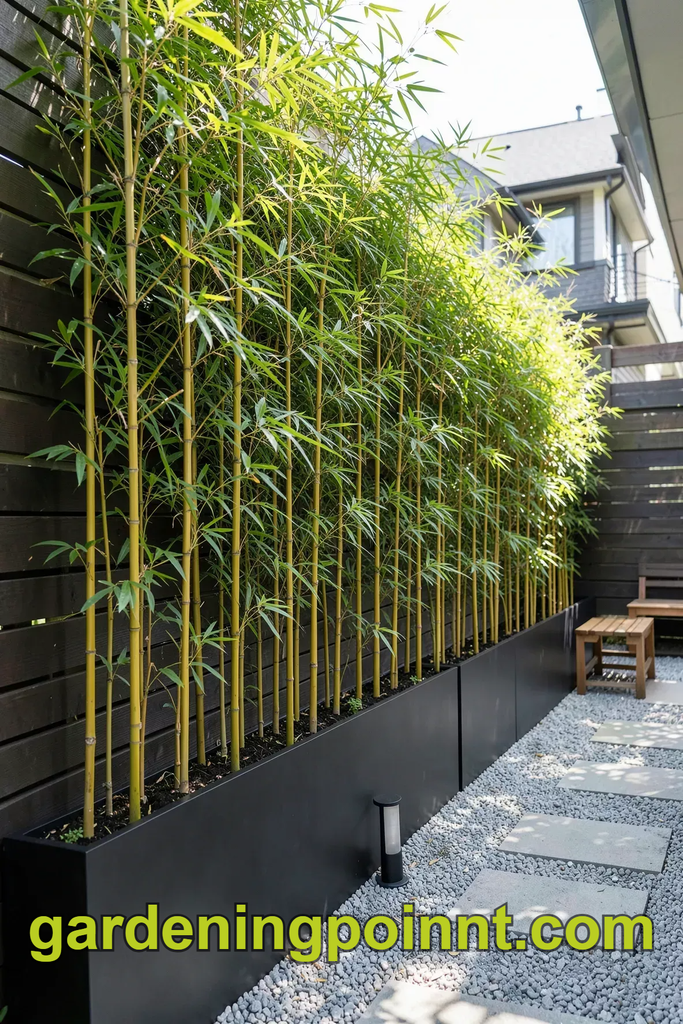
Italian Cypress offers a distinctly formal, narrow, columnar shape that works particularly well for creating an elegant, structured privacy screen along a property line or driveway. This Mediterranean native thrives in warm, dry climates and struggles in areas with heavy humidity or poorly drained soil, making it best suited to regions like the southwestern United States. Its narrow footprint allows for closer spacing than bushier privacy trees, making it an efficient choice for properties with limited width.
7. Southern Magnolia for Year-Round Beauty and Privacy
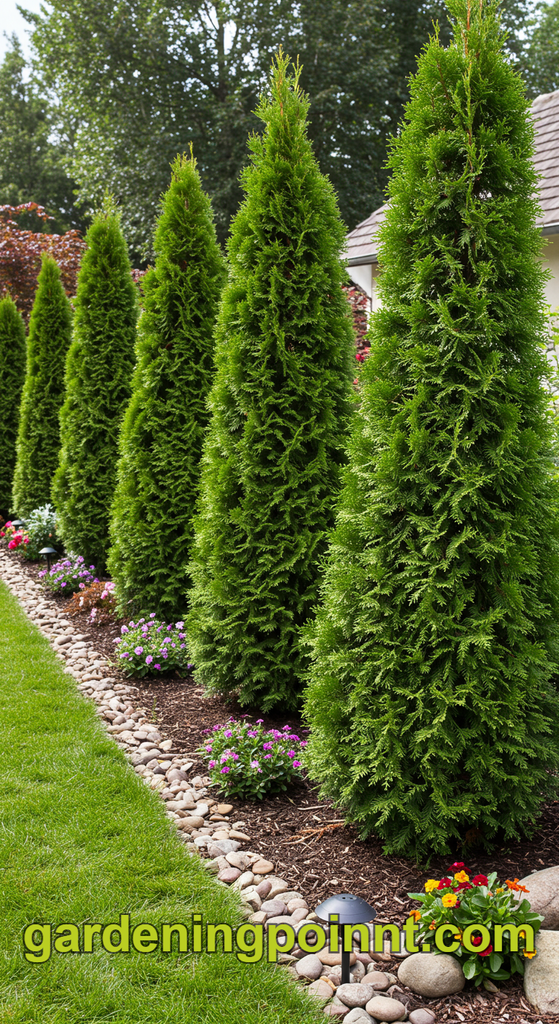
Southern Magnolia combines effective evergreen privacy screening with the added benefit of large, fragrant white flowers in late spring and summer, making it a popular dual-purpose choice for warmer climates. Its broad, glossy leaves provide dense coverage from a relatively young age, and mature trees can reach forty to eighty feet in height depending on the specific cultivar chosen. Compact cultivars like Little Gem offer similar screening benefits in a smaller mature size, better suited to residential properties with limited space.
8. Eastern Red Cedar for Native, Low-Maintenance Screening
Eastern Red Cedar is a hardy, adaptable evergreen native to much of the eastern and central United States, tolerating a wide range of soil conditions and requiring minimal maintenance once established. Its dense, aromatic foliage provides effective year-round privacy, and its berries offer a valuable food source for birds, adding an ecological benefit alongside its screening function. This drought-tolerant native tree is particularly well suited to naturalistic landscape designs and rural properties.
9. Skip Laurel for Shade-Tolerant Privacy Screening
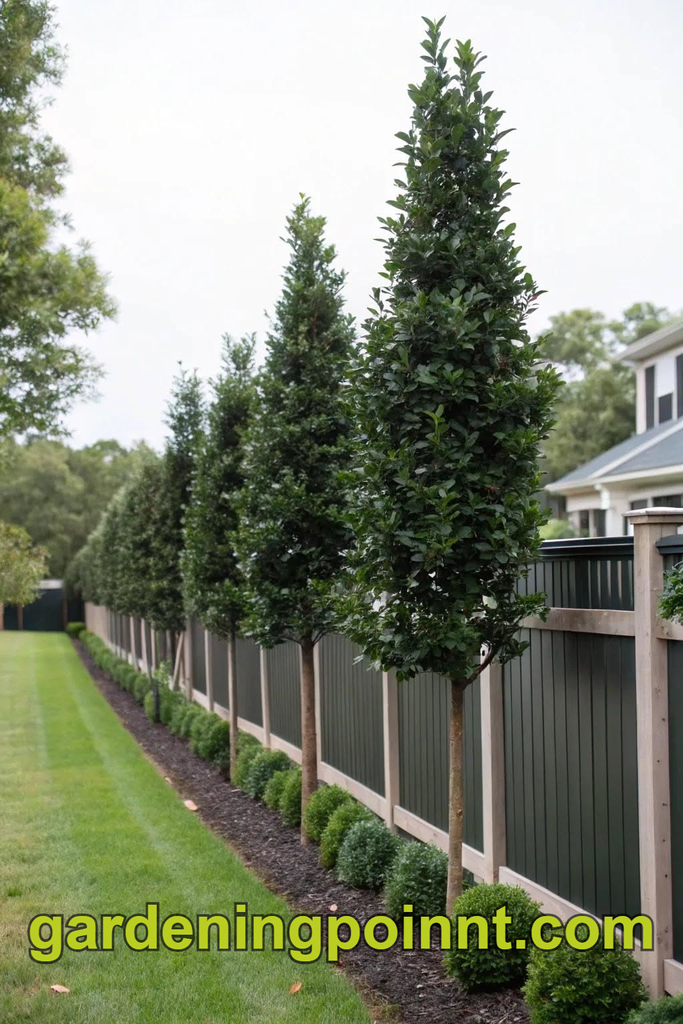
For properties with shaded areas where many privacy trees struggle, Skip Laurel offers reliable evergreen screening that tolerates partial shade better than most conifer options. Its glossy, dark green leaves create a dense, attractive hedge-like screen when planted in a row, and it can be pruned to maintain a more formal shape if desired. Skip Laurel typically reaches ten to twelve feet in height, making it well suited to residential properties seeking moderate-height privacy screening.
10. Bamboo for Fast, Dramatic Screening
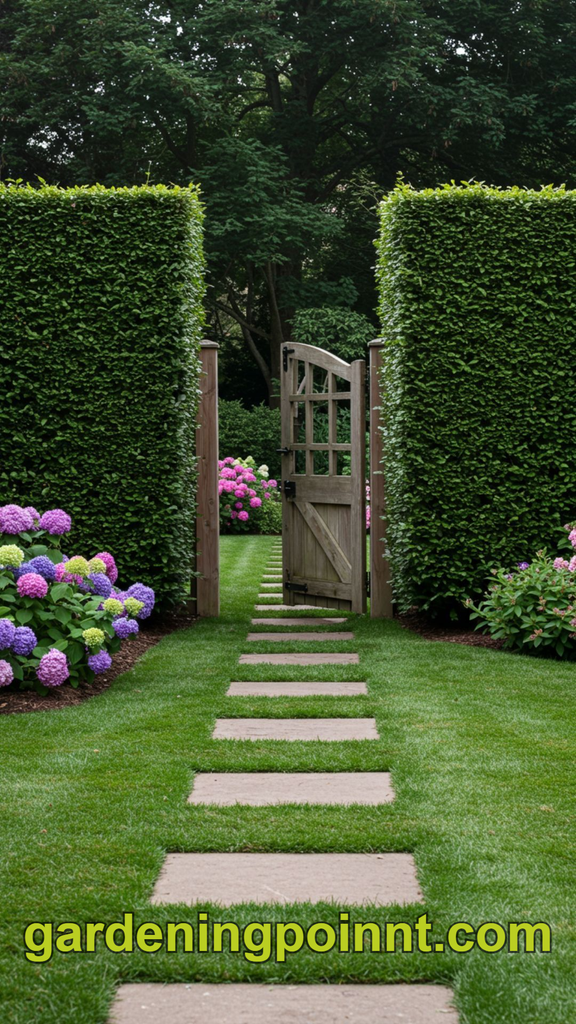
Certain clumping bamboo varieties offer an extremely fast-growing, dramatic privacy screen unlike traditional trees, with some species capable of reaching full height within a single growing season. Choosing clumping rather than running bamboo varieties is essential to prevent aggressive spreading that can quickly become invasive and difficult to control. Bamboo’s distinctive appearance and rapid growth make it particularly popular for modern landscape designs seeking quick, striking privacy solutions.
11. Deciduous Options for Seasonal Privacy With Additional Benefits
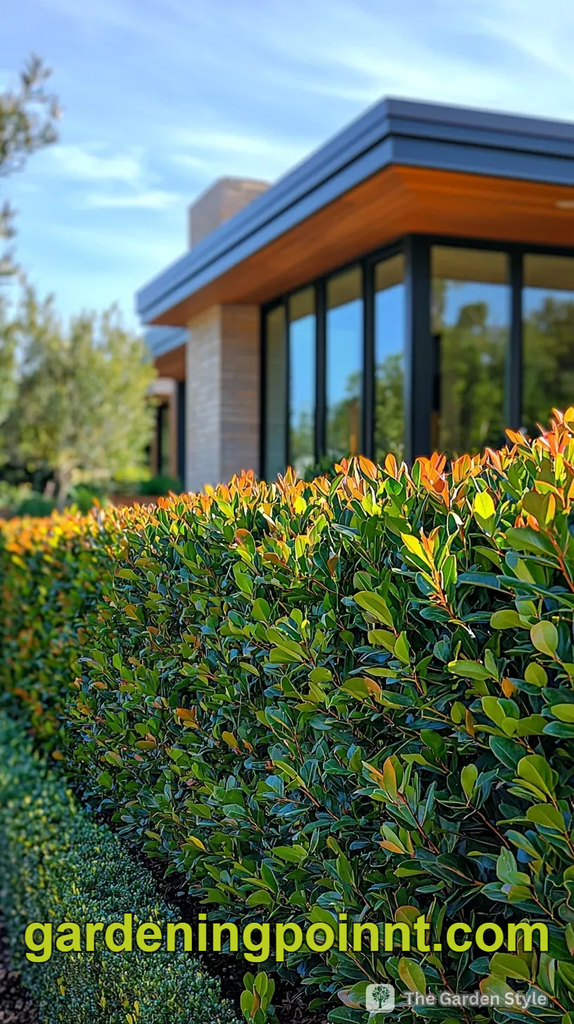
While evergreens are generally preferred for year-round privacy, certain deciduous trees offer dense summer screening along with additional benefits like fall color, flowers, or edible fruit that evergreens cannot provide. Trees like River Birch or certain flowering crabapple varieties can supplement a primarily evergreen privacy planting, adding visual interest and seasonal change while accepting reduced screening during winter months. This mixed approach works particularly well when privacy is less critical during colder months when outdoor activity is naturally reduced.
12. Plan Proper Spacing Between Privacy Trees
Spacing privacy trees too closely together can lead to competition for water and nutrients, stunted growth, and increased susceptibility to disease due to poor air circulation, while spacing them too far apart leaves gaps in the screening effect. As a general guideline, trees should be spaced at a distance roughly equal to two-thirds of their expected mature width, allowing branches to eventually touch and create a continuous screen without severe overcrowding. Consulting the specific mature width of your chosen species is essential for calculating appropriate spacing before planting.
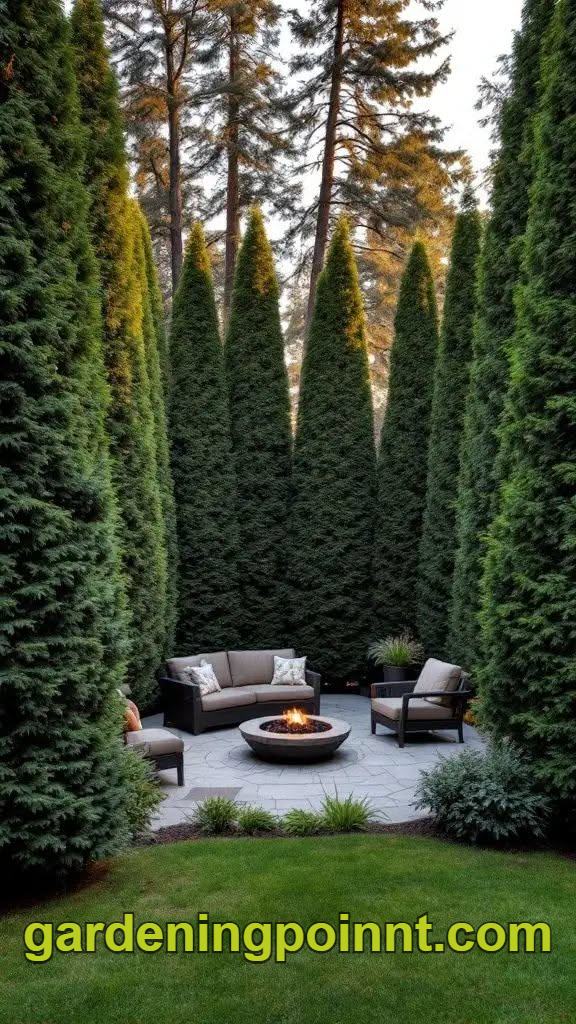
13. Stagger Plantings for a Fuller, More Natural Screen
Rather than planting privacy trees in a single straight row, staggering them in a zigzag or double-row pattern can create a fuller, more effective screen with fewer visible gaps, particularly when viewed from an angle. This staggered approach also adds visual depth and a more naturalistic appearance compared to a rigid single line of identical trees. For narrower properties where a double row is not feasible, choosing trees with a naturally dense, full growth habit becomes even more important to compensate for the single-row limitation.
14. Combine Different Tree Heights for a Layered Screen
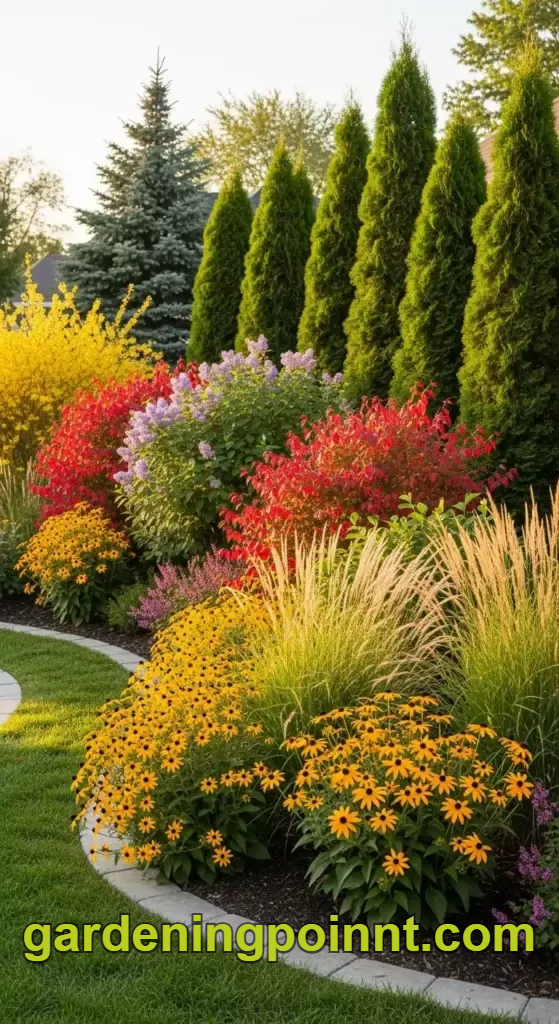
Incorporating privacy trees of varying heights, rather than relying on a single species and size, can create a more effective and visually interesting layered screen. Taller trees toward the back provide overall height and screening from upper-story windows, while shorter shrubs or trees planted in front fill in lower gaps and add textural variety. This layered approach also provides better screening at multiple viewing angles compared to a single uniform row.
15. Consider Root Systems and Underground Utilities
Before planting privacy trees, it is important to consider the mature root system’s potential impact on nearby structures, underground utilities, and neighboring properties. Fast-growing, aggressive-rooted species can sometimes cause damage to foundations, driveways, or underground pipes if planted too close to these structures. Contacting local utility marking services before digging and researching the root habits of your chosen species helps avoid costly problems down the line.
16. Water New Privacy Trees Consistently During Establishment
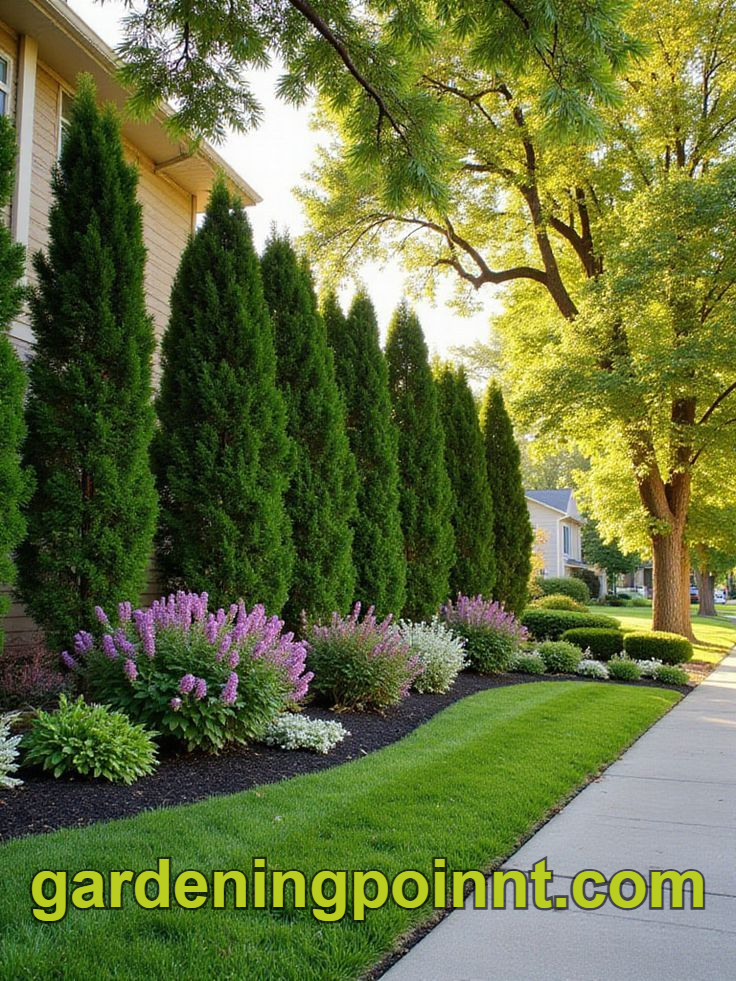
Newly planted privacy trees require consistent watering during their first one to two years to establish a healthy root system capable of supporting their long-term growth and screening function. Deep, infrequent watering that encourages roots to grow downward and outward is generally more effective than frequent shallow watering, which can lead to weak, surface-level root systems. Applying a layer of mulch around the base of newly planted trees helps retain soil moisture and reduce watering frequency during this critical establishment period.
17. Prune Privacy Trees to Maintain Density and Shape
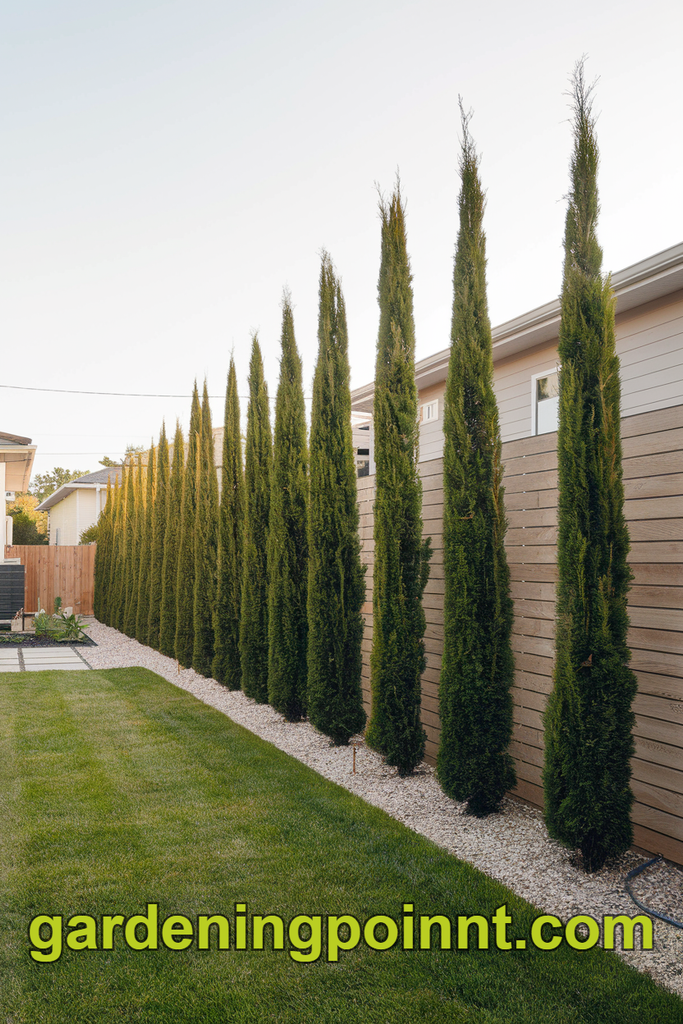
Regular pruning, particularly during the early years of a privacy tree’s growth, encourages denser branching and fuller foliage rather than allowing trees to grow tall and thin with gaps near the base. Light trimming of the top growth can also encourage lateral branching, which is particularly important for maintaining full coverage down to ground level. Species like Leyland Cypress and arborvitae generally respond well to regular shearing, while other privacy trees may require only minimal pruning to remove damaged or crossing branches.
18. Monitor for Pests and Diseases Common to Privacy Trees
Certain fast-growing privacy tree species, including Leyland Cypress and some arborvitae varieties, can be susceptible to specific pests and fungal diseases, particularly when planted too closely together or in poorly drained soil. Regular inspection for signs of browning foliage, unusual spotting, or pest activity allows for early intervention before problems spread throughout an entire privacy screen. Choosing disease-resistant cultivars and maintaining proper spacing and airflow between trees significantly reduces the risk of these common issues.
19. Consider Fast-Growing and Slow-Growing Trade-offs
Fast-growing privacy trees like Leyland Cypress and Green Giant Arborvitae provide quicker screening but often come with trade-offs, including shorter overall lifespans, greater susceptibility to storm damage due to weaker wood, and increased maintenance needs to control their vigorous growth. Slower-growing options like Emerald Green Arborvitae or Southern Magnolia take longer to reach full screening height but generally offer greater longevity, sturdier structure, and reduced long-term pruning requirements. Balancing the desire for quick privacy against these long-term considerations helps ensure a satisfying choice for years to come.
20. Plan for Long-Term Maintenance and Tree Health
A successful privacy tree screen requires ongoing attention well beyond the initial planting to remain healthy and effective for decades. Periodic fertilization suited to the specific tree species, continued monitoring for pests and diseases, and occasional pruning to maintain shape and density all contribute to the long-term success of a privacy planting. Planning for eventual tree replacement, in the rare event that individual trees within a screen fail or become diseased, ensures the overall privacy function can be maintained without requiring a complete replanting of the entire row.
Frequently Asked Questions About Privacy Trees
What is the fastest-growing privacy tree? Green Giant Arborvitae and Leyland Cypress are both known for rapid growth, often adding three feet or more per year under favorable growing conditions.
How far apart should privacy trees be planted? A general guideline is to space trees at roughly two-thirds of their expected mature width, allowing branches to eventually touch and form a continuous screen without severe overcrowding.
Do privacy trees need full sun? Most popular privacy tree species prefer full sun for optimal density and growth, though some options like Skip Laurel tolerate partial shade better than typical conifer choices.
How tall do privacy trees typically grow? This varies significantly by species, ranging from narrow options like Emerald Green Arborvitae at twelve to fourteen feet, to large trees like Green Giant Arborvitae that can exceed fifty feet at maturity.
Are evergreen trees better than deciduous trees for privacy? Generally yes, since evergreen trees maintain their foliage and screening effect throughout the entire year, while deciduous trees lose their leaves in fall and winter, significantly reducing privacy during colder months.
With careful species selection based on climate, available space, and growth rate, along with proper spacing and ongoing maintenance, privacy trees can create an effective, attractive, and long-lasting natural screen for any property. Taking the time to research the specific needs of your chosen species will help ensure your privacy planting thrives and provides reliable screening for many years to come.