
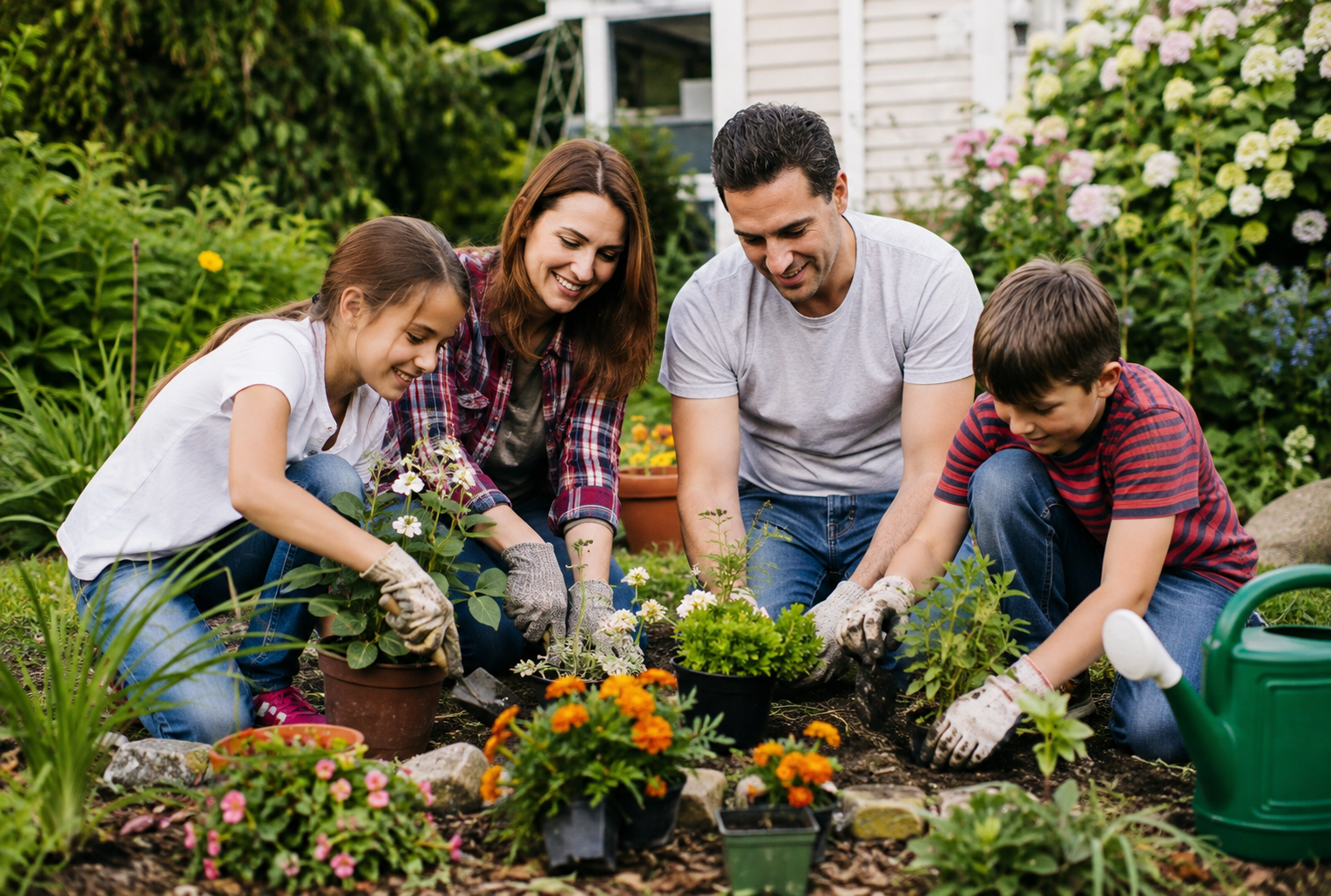
Gardening is more than planting flowers, growing vegetables, or keeping a few plants around the home. It can become a wonderful activity that brings family members and friends closer together. In a busy life where people often spend their free time on phones, computers, and television, gardening gives everyone a chance to slow down and enjoy something meaningful together. Working with plants creates opportunities to talk, share responsibilities, learn new skills, and enjoy the results of teamwork.
The benefits of gardening with family and friends can be enjoyed by people of almost every age. Children can learn about nature while adults can enjoy a relaxing outdoor activity. Friends can spend quality time together while creating a beautiful garden. Whether you have a large backyard, a small yard, a balcony, or a few containers, gardening can become an enjoyable social hobby.
Gardening Creates Quality Family Time
One of the biggest benefits of gardening with family is the opportunity to spend quality time together. Modern family life can become very busy because of work, school, household responsibilities, and other activities. Finding simple ways to spend time together is important for maintaining strong family relationships.
Gardening provides a natural reason for family members to work together. Parents can prepare the soil while children plant seeds or water the plants. Older children can help with simple gardening tasks and learn how to care for growing vegetables and flowers.
Unlike many indoor activities, gardening allows everyone to participate actively. Family members can talk while working, share ideas, and enjoy the fresh air. These simple moments can create positive memories that stay with children as they grow older.
Gardening Strengthens Friendships
Gardening can also be a great way to strengthen friendships. Friends can work together on a shared garden project or simply spend an afternoon planting and caring for plants. Working together toward a common goal creates a sense of connection.
Friends can exchange gardening ideas, share seeds, recommend useful tools, and help each other solve common gardening problems. Someone who has experience growing tomatoes, herbs, or flowers can teach another person what they have learned.
Gardening does not require constant conversation, which can make it comfortable for friends who simply want to relax together. You can work with your hands, enjoy the outdoor environment, and talk naturally while completing gardening tasks.
Children Learn About Nature
Gardening with children is an excellent way to introduce them to nature. Instead of only reading about plants in books or watching educational videos, children can see the growing process with their own eyes.
They can learn how seeds develop into small plants and eventually produce flowers, fruits, or vegetables. They can also observe insects, birds, worms, and other small creatures that live around a garden.
This hands on experience can help children understand where food comes from and why plants need sunlight, water, healthy soil, and proper care. Gardening can also encourage children to become more curious about the natural world.
Gardening Teaches Teamwork
Another important benefit of gardening with family and friends is that it teaches teamwork. A garden often requires many different tasks. Someone may prepare the soil, another person may plant seeds, while someone else waters the plants.
When people divide responsibilities, the work becomes easier and more enjoyable. Everyone can contribute according to their age, ability, and interest. Children can complete simple jobs while adults handle more demanding tasks.
Teamwork in the garden can also teach people to appreciate the contribution of others. When everyone works together, the final result becomes something that belongs to the whole group.
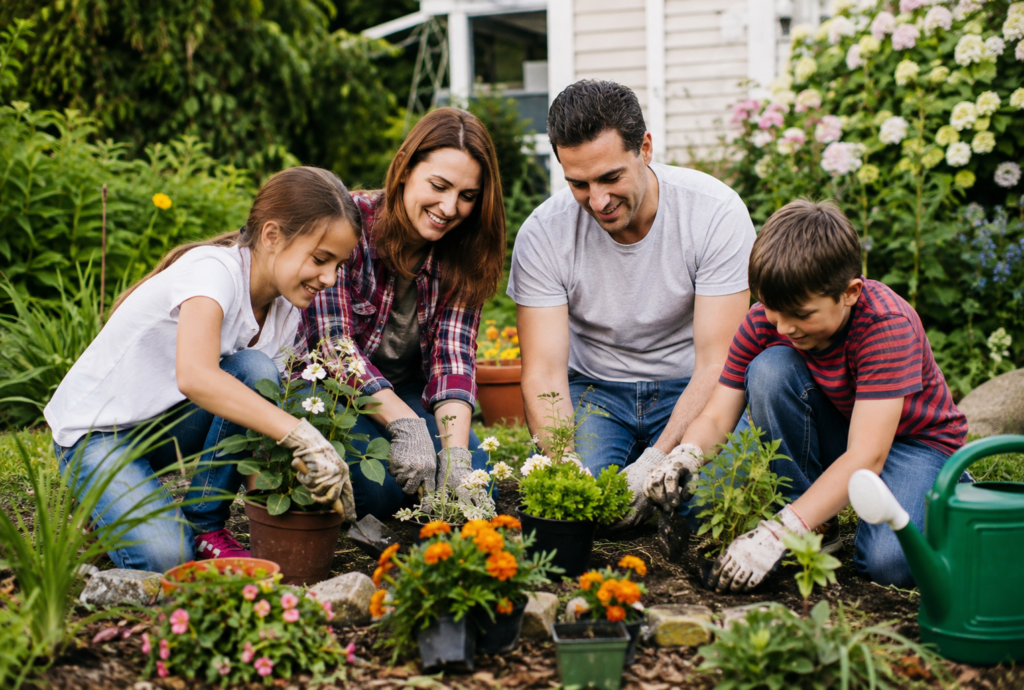
Gardening Encourages Healthy Outdoor Activity
Gardening is a simple form of physical activity. Digging, planting, watering, pulling weeds, carrying small containers, and moving around the garden keep the body active.
Gardening with family and friends can make physical activity feel less like a routine exercise session and more like an enjoyable social experience. People are more likely to stay engaged when they are doing something interesting with others.
Spending time outdoors also gives people a break from sitting indoors for long periods. A regular gardening routine can encourage families and friends to spend more time outside and stay active together.
Growing Food Can Encourage Healthy Eating
Growing vegetables and herbs at home can also support healthier eating habits. When children and adults participate in growing food, they may become more interested in trying the produce they helped grow.
A family can plant simple vegetables such as tomatoes, lettuce, spinach, carrots, or peppers. Herbs such as mint, basil, coriander, and parsley can also be easy choices for a home garden.
Harvesting fresh produce together can make meals more exciting. Children may feel proud when they see vegetables from their own garden being used in family meals. This can create a positive connection between gardening and healthy eating.
Gardening Reduces Everyday Stress
Spending time in a garden can be calming. The sight of green plants, the feel of soil, and the fresh outdoor environment can create a peaceful atmosphere.
When family members or friends garden together, they can take a break from daily responsibilities and focus on a simple activity. Talking while planting or watering plants can also provide an opportunity to share thoughts and enjoy each other’s company.
Gardening does not need to be perfect to be enjoyable. Even a small amount of time spent caring for plants can provide a pleasant break from a busy routine.
Gardening Builds Patience and Responsibility
Plants do not grow instantly. Seeds need time to develop, and vegetables and flowers require regular care. Gardening therefore teaches an important lesson about patience.
Children can learn that good results often require consistent effort. They may water a plant every day and watch it slowly become stronger. This experience can help them understand the value of responsibility.
Adults can also benefit from this lesson. Caring for a garden requires regular attention, but the rewards can be satisfying. Watching plants grow because of your care can create a strong sense of achievement.
Creating Beautiful Memories Together
Some of the best benefits of gardening with family and friends are emotional rather than practical. A garden can become connected with memories of planting seeds, harvesting vegetables, decorating flower beds, or enjoying an afternoon outdoors.
Families can take pictures as their garden changes throughout the seasons. Friends can create a shared gardening project and remember the experience for years.
These memories can be especially meaningful for children. They may remember helping a parent plant their first flower or picking vegetables from the garden with grandparents. Simple gardening activities can become special family traditions.
Gardening Can Bring Different Generations Together
Gardening is also a hobby that can connect different generations. Grandparents may have years of gardening experience and can share their knowledge with children and grandchildren.
Older family members can explain traditional planting methods, teach people how to care for different plants, and share stories about gardens from their childhood. Younger family members can bring new ideas and enthusiasm.
This exchange of knowledge creates stronger family connections. Gardening gives different generations something useful and enjoyable to do together.
Gardening Makes Sharing Easy
Gardening can encourage a friendly culture of sharing. When a garden produces more vegetables, herbs, or flowers than one family needs, the extra produce can be shared with friends, relatives, or neighbors.
Friends can also exchange seeds, cuttings, gardening tools, and useful advice. Sharing the results of gardening can make the hobby more rewarding.
A simple basket of homegrown vegetables or fresh herbs can become a thoughtful gift. These small acts of sharing can strengthen relationships and create a stronger sense of community.
How to Start Gardening With Family and Friends
Starting a group gardening project does not have to be complicated. Choose a small area and decide what everyone would like to grow. Begin with plants that are suitable for your local climate and easy for beginners to manage.
Give every person a simple responsibility. Children can water plants or place seeds in the soil. Adults can prepare planting areas and manage more difficult tasks. Friends can meet once or twice a week to work on the garden together.
It is also useful to celebrate small achievements. The first new leaf, first flower, or first harvest can become a reason to enjoy time together.
Conclusion
The benefits of gardening with family and friends go far beyond growing plants. Gardening creates quality time, strengthens relationships, teaches teamwork, encourages outdoor activity, and introduces children to nature. It can also support healthy eating, patience, responsibility, and emotional well being.
The best part is that gardening does not require a huge yard or expensive equipment. A few containers, some soil, and suitable plants can be enough to begin. When people work together, even a small garden can become a place filled with learning, laughter, friendship, and beautiful memories.
Gardening with family and friends is therefore a simple and meaningful hobby for people of different ages. By planting and caring for something together, people can grow more than plants. They can grow stronger relationships, healthier habits, and lasting memories.