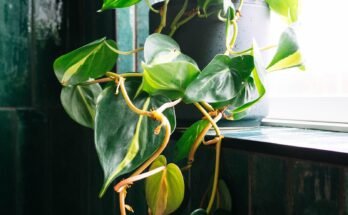
Two people can own the exact same pothos and end up with completely different results. One puts it in a plastic nursery pot on the floor by the door. The other repots it into a textured ceramic planter, sets it on a stack of books at eye level, and lets it trail along a shelf. Same plant, same care routine — but only one of these looks like an intentional design choice.
House plants decor is the art of treating greenery as a design element rather than an afterthought. It sits at the intersection of interior design and horticulture: the plant needs to be healthy where you put it, but where you put it also needs to work visually with the room. Get both right, and plants stop looking like something you own and start looking like something you designed with.
This guide walks through the principles, the room-by-room ideas, the pot and stand choices, and the mistakes that make even healthy plants look messy.
The Core Principles of Plant Styling
Vary the Height
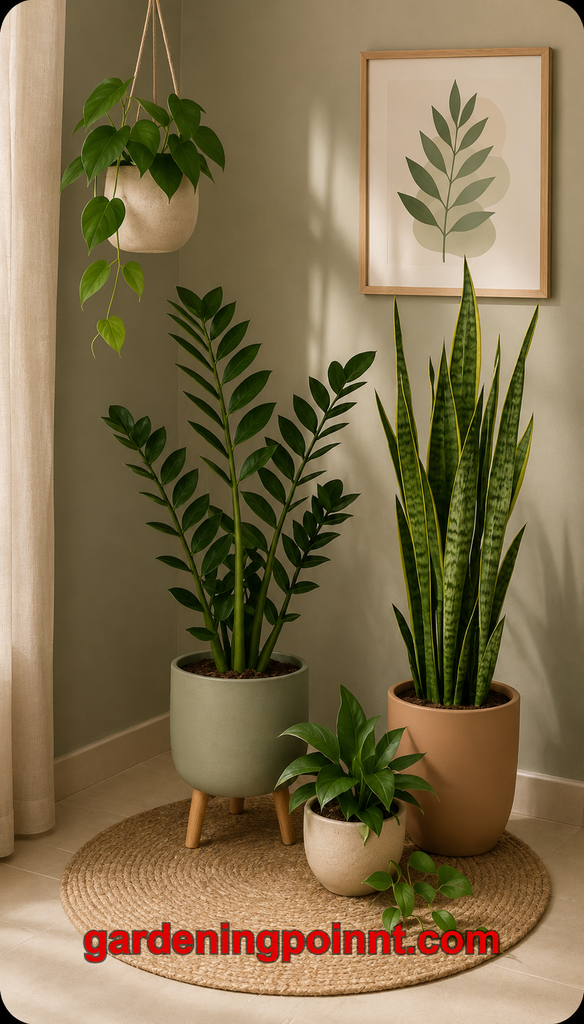
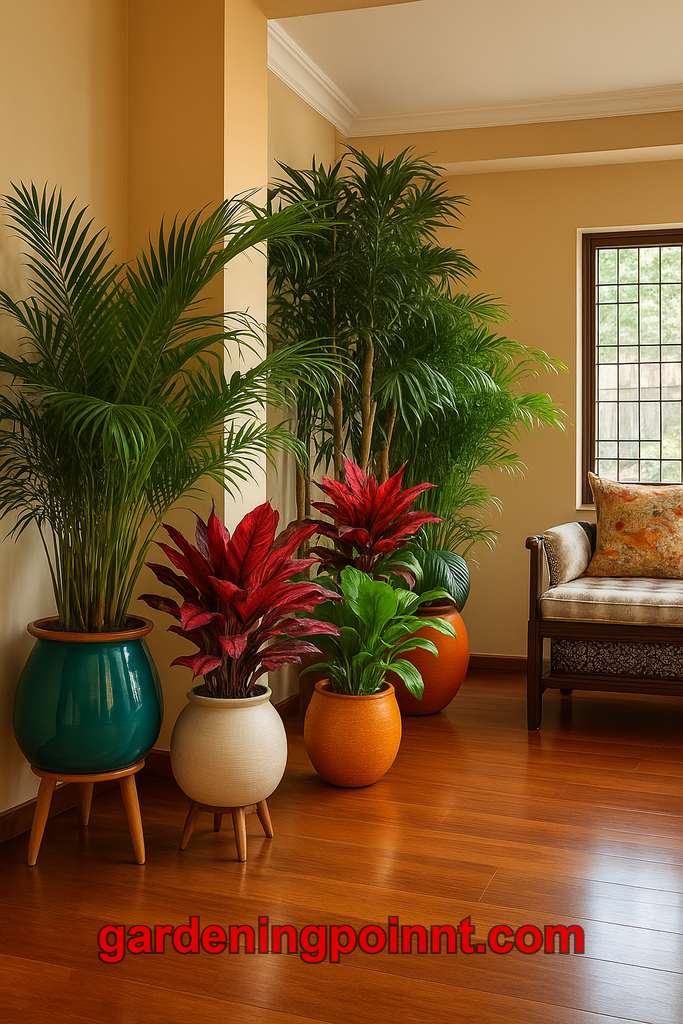
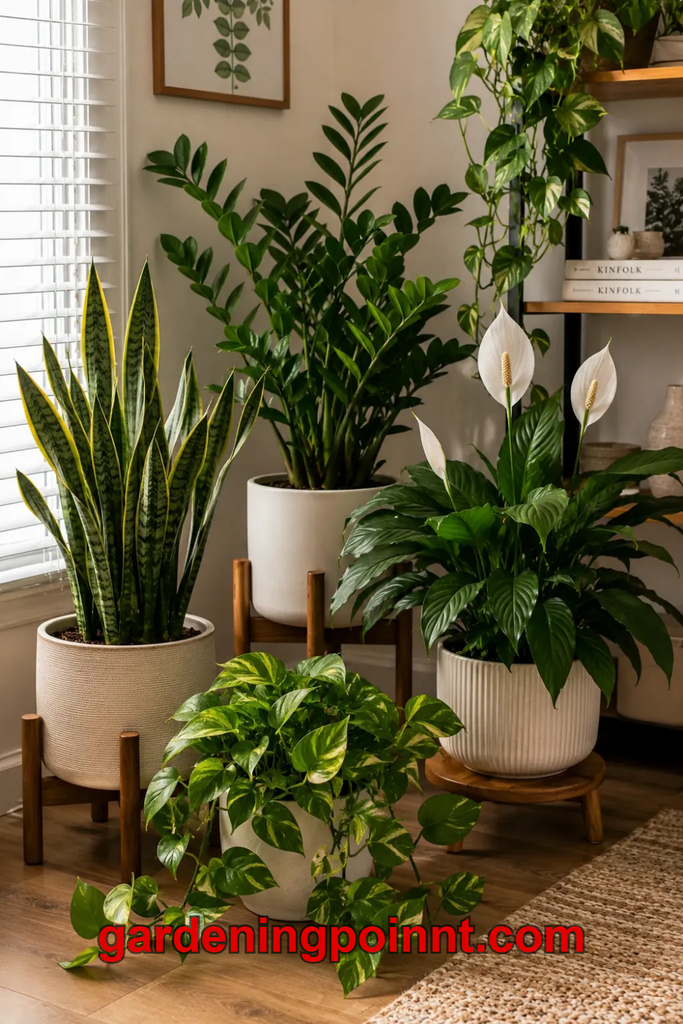
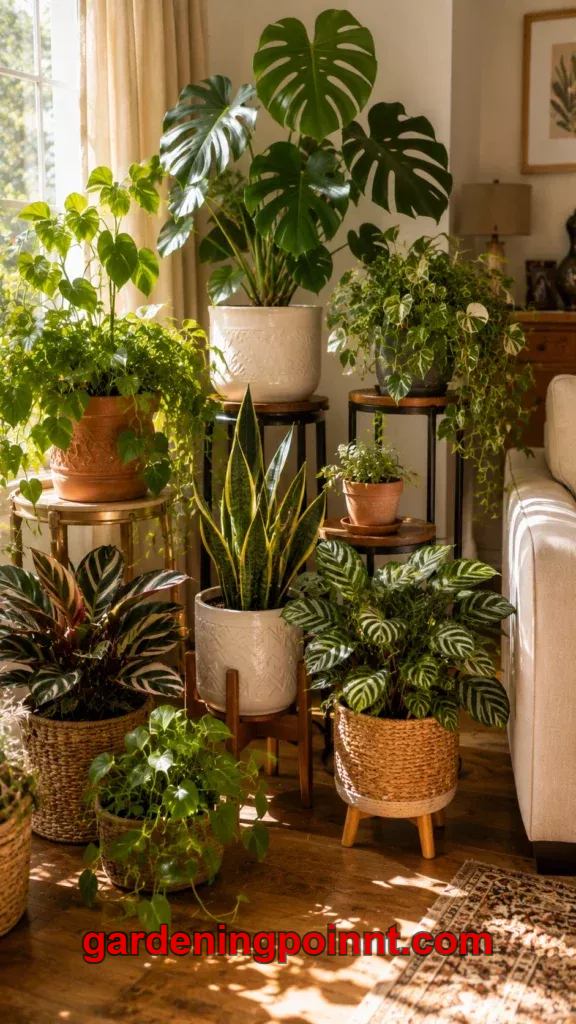
A room full of plants sitting at the same height on the floor reads as flat and cluttered. Professional stylists build in at least three height levels: floor plants that reach knee or shoulder height, mid-level plants on stools or side tables, and trailing or hanging plants above eye level. This vertical rhythm is what makes a plant collection feel composed rather than scattered.
Group in Odd Numbers
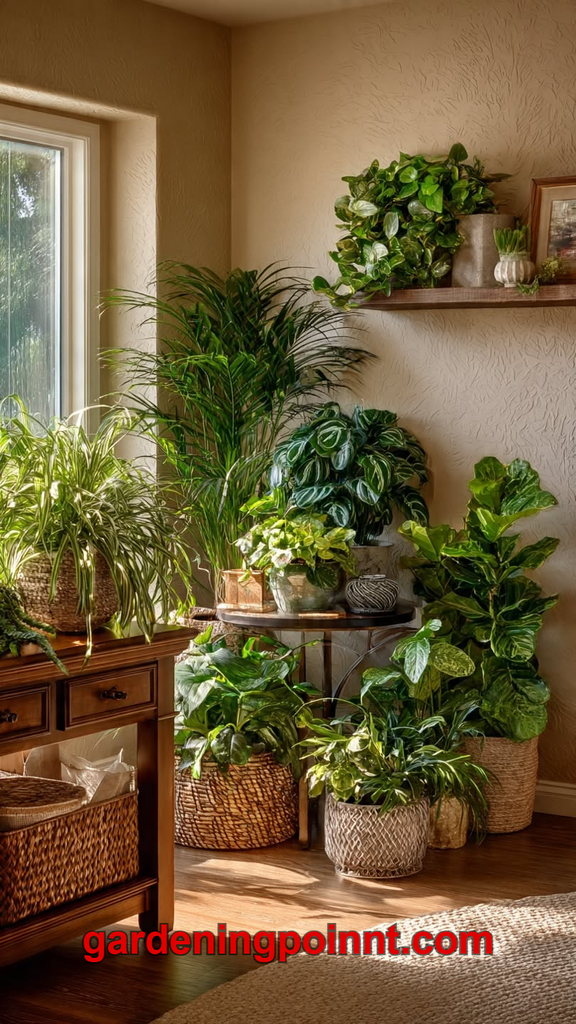
Human eyes find groups of three, five or seven more visually satisfying than pairs or even numbers. A cluster of three plants of varying heights and pot sizes reads as a deliberate vignette. Two plants side by side, identical in size, often reads as accidental.
Repeat a Material or Color
Plant collections can quickly look chaotic if every pot is a different color, texture and shape. Choose one or two materials — terracotta, matte black ceramic, woven rattan — and repeat them across the room. This single trick does more to make a collection look curated than almost anything else on this list.
Let Foliage Do the Talking
Not every plant needs a decorative pot. Sometimes the most striking choice is a plain terracotta or simple white cylinder that disappears visually and lets a dramatic leaf shape — a monstera, a fiddle leaf fig, a bird of paradise — become the actual focal point.
Match Plant Scale to Room Scale
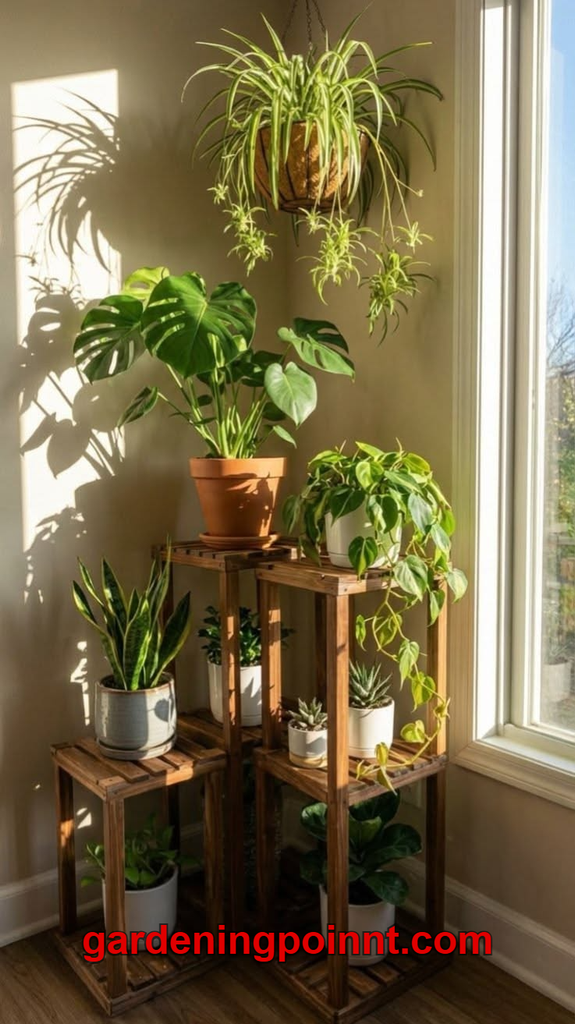
A six-inch succulent looks lost on the floor of a large living room. A seven-foot fiddle leaf fig looks absurd on a small side table. Match the plant’s ultimate size to the scale of the space and the furniture around it, not just to the empty gap you’re trying to fill today.
Choosing Pots and Planters for Decor
Terracotta
Warm, earthy and endlessly versatile. Terracotta suits Mediterranean, boho and Scandinavian-adjacent interiors equally well. It also happens to be functionally excellent, since its porous walls help soil dry out — a decor choice that is also a care choice.
Ceramic and Stoneware
Glazed ceramic pots come in enough colors and finishes to match almost any interior style, from glossy jewel tones for a maximalist room to matte stoneware for a minimalist one. They hold moisture longer than terracotta, which suits plants that prefer consistent dampness.
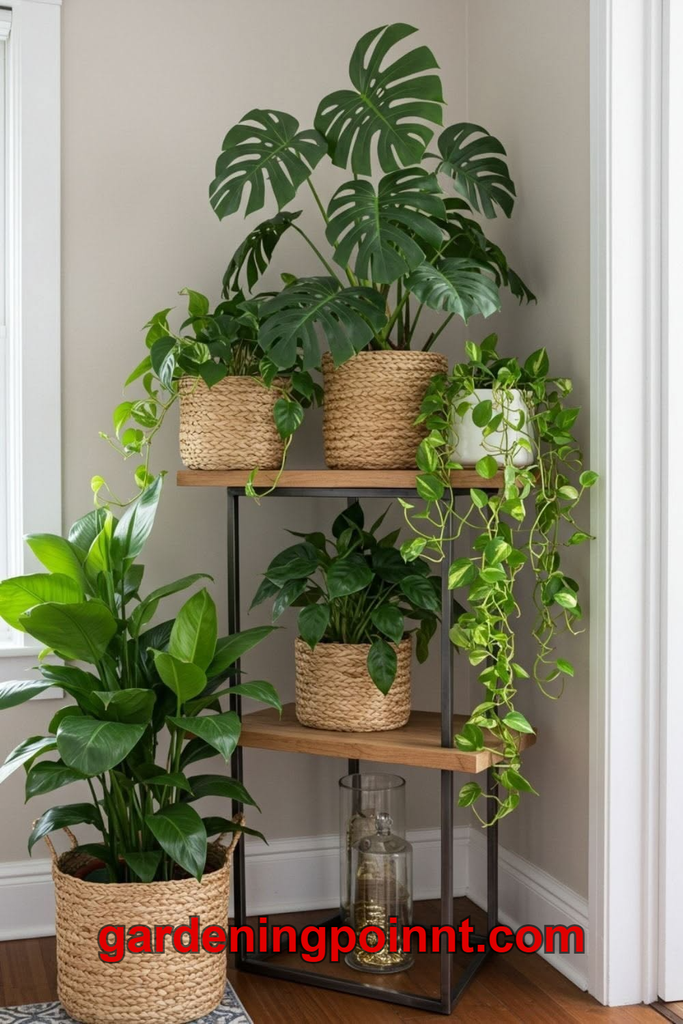
Woven and Natural Fiber Baskets
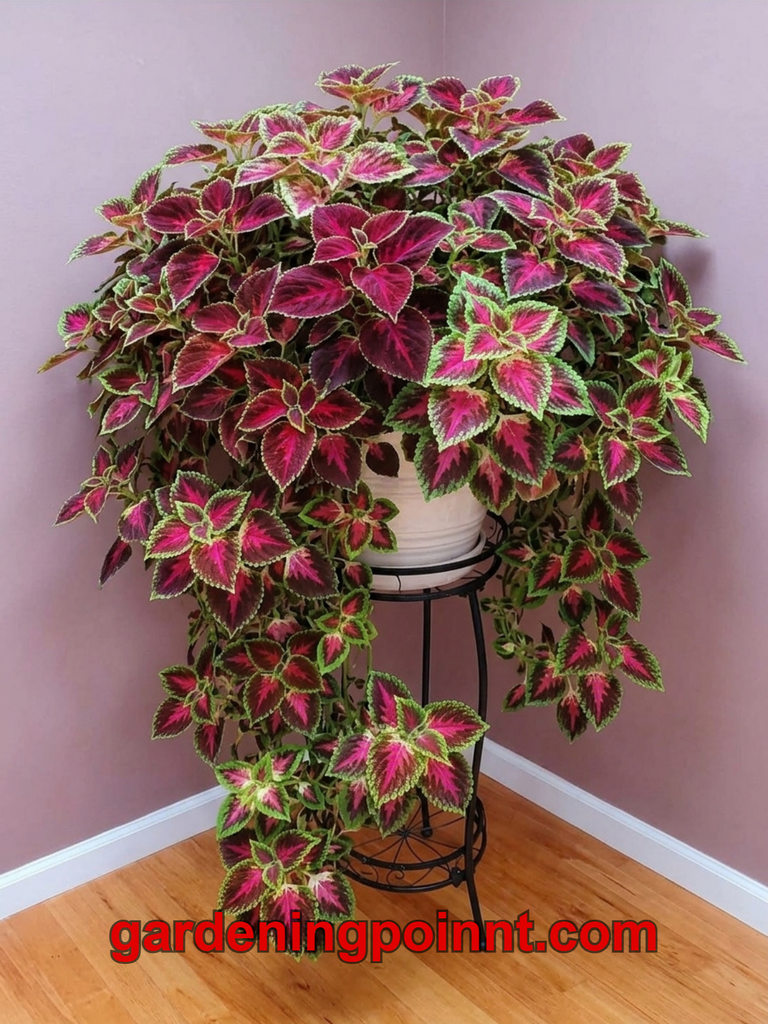
Rattan, seagrass and jute planter covers add texture without competing for visual attention. They work particularly well in warm, layered interiors and soften the look of an otherwise plain plastic nursery pot hidden inside.
Concrete and Stone
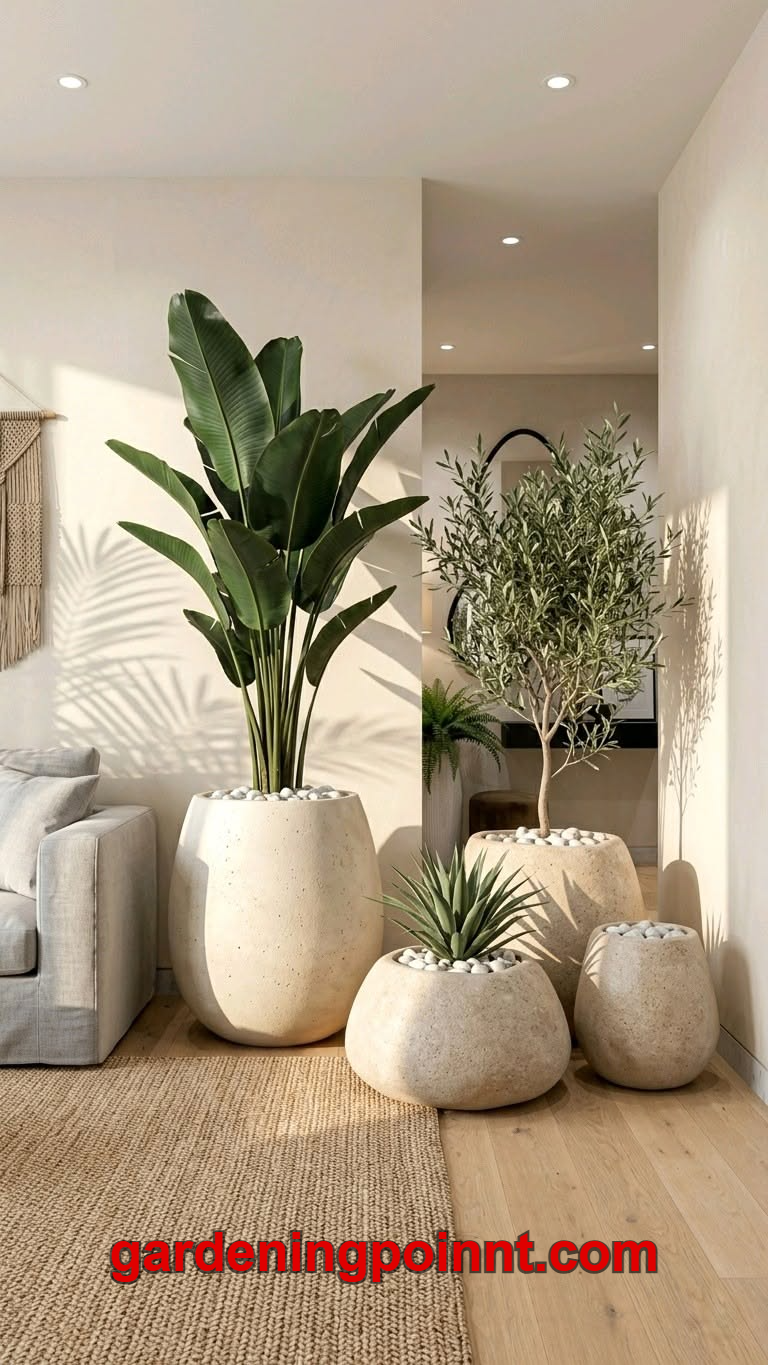
Cool, architectural and heavy. Concrete planters suit modern, industrial and minimalist spaces, and their weight makes them a natural choice for larger floor plants that need stability.
Metal Planters
Brass, copper and matte black metal introduce a more polished, sometimes glamorous note. Metal pairs particularly well with dark, moody color schemes and modern furniture.
The Double-Potting Trick
Professional stylists rarely repot a plant directly into its final decorative container. Instead, they keep the plant in its plastic nursery pot with proper drainage and simply drop that pot inside a decorative outer cover, called a cachepot. This protects the plant, makes swapping decor easy, and avoids the risk of a beautiful ceramic pot without drainage holes causing root rot.
Plant Stands and Elevated Display
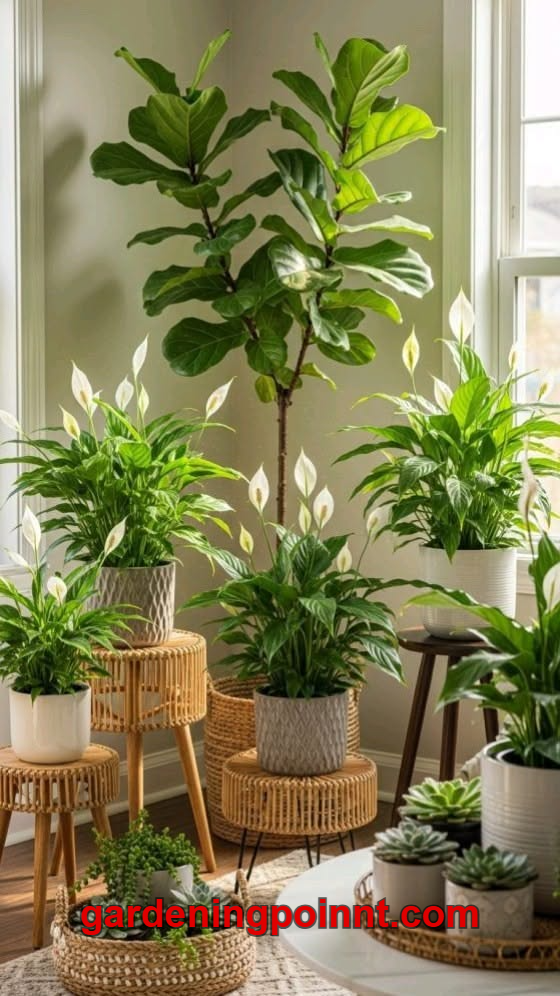
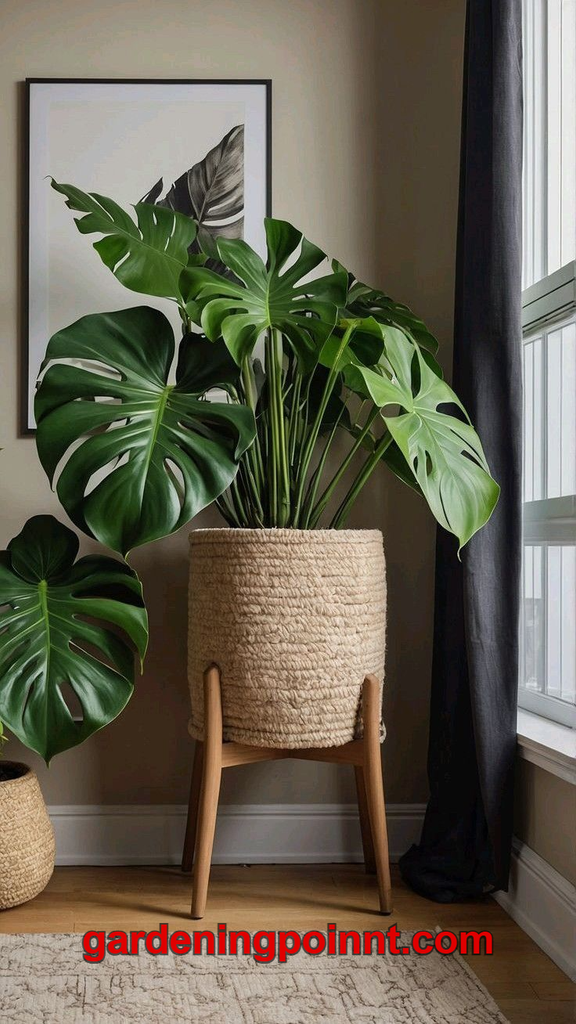
A plant stand does two jobs at once: it lifts a plant into better light, and it lifts it visually so it becomes part of the room’s composition rather than sitting on the floor unnoticed.
Wooden stands with simple turned legs suit mid-century and Scandinavian interiors and pair beautifully with warm terracotta pots.
Metal tripod stands add a slightly retro, airy look and work well for trailing plants like pothos or string of pearls, letting the vines cascade below the pot.
Tiered stands, which hold three or four plants at ascending heights on a single frame, are an efficient way to create a mini indoor garden in a narrow corner without eating up floor space.
Stools and side tables repurposed as plant stands add flexibility — they can be moved seasonally as light changes and swapped between plant duty and actual furniture duty when guests are over.
Shelf Styling With Plants
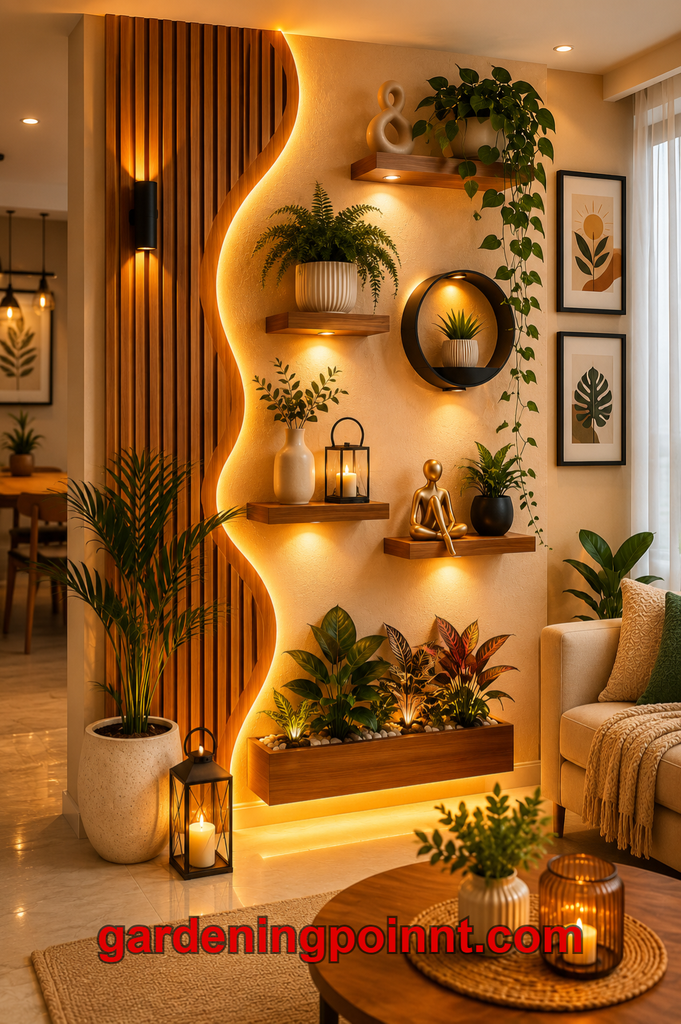
Bookshelves and floating shelves are some of the most underused spaces for plant decor.
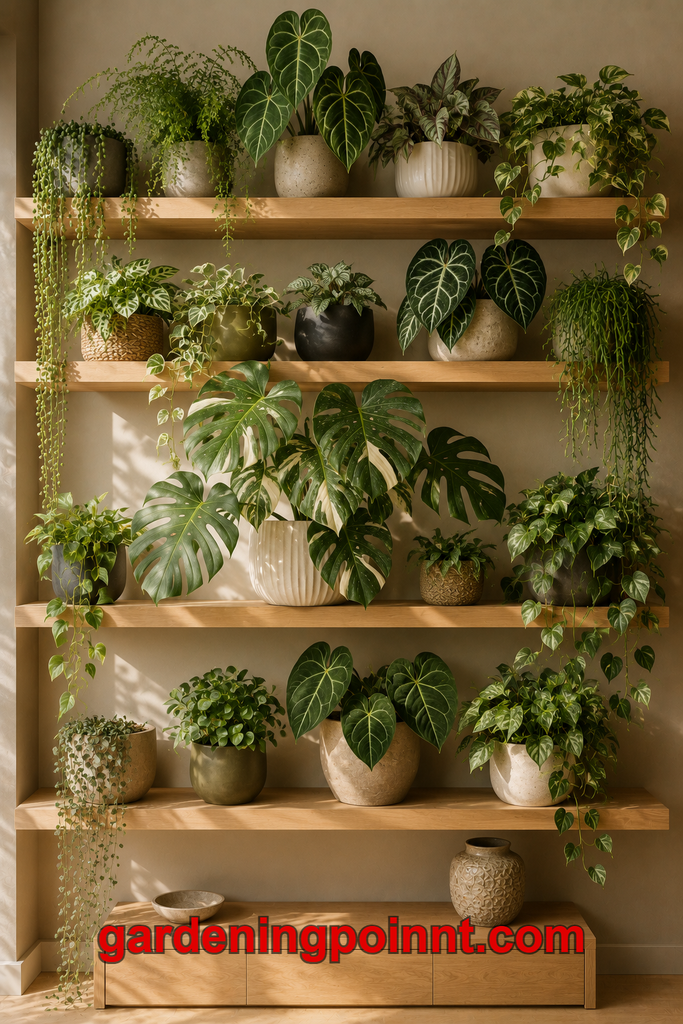
Place trailing plants — pothos, string of hearts, philodendron — on the top shelf and let their vines spill downward across the shelves beneath them. This creates a natural, layered green curtain effect that draws the eye up the entire shelving unit.
Mix plants with books and objects rather than dedicating an entire shelf to greenery alone. A small potted plant next to a stack of books and a piece of ceramic art reads as a styled vignette; a shelf packed wall-to-wall with identical pots reads as storage.
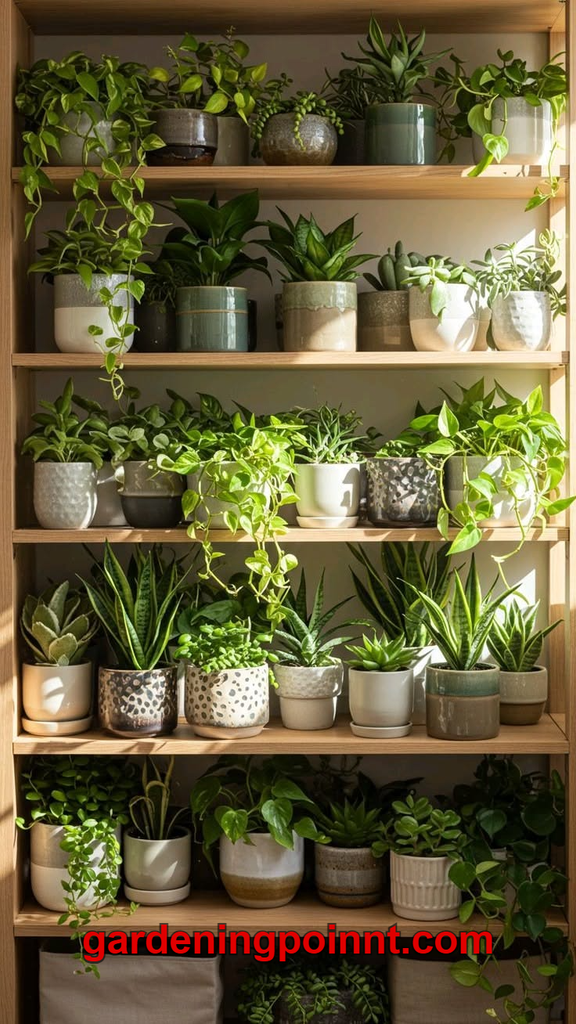
Vary leaf shape across a shelf run. Pairing a spiky snake plant, a round-leafed peperomia and a trailing pothos on the same shelf creates visual contrast that a shelf of five identical pothos plants cannot.
Hanging Plants and Macramé
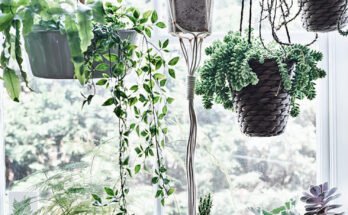
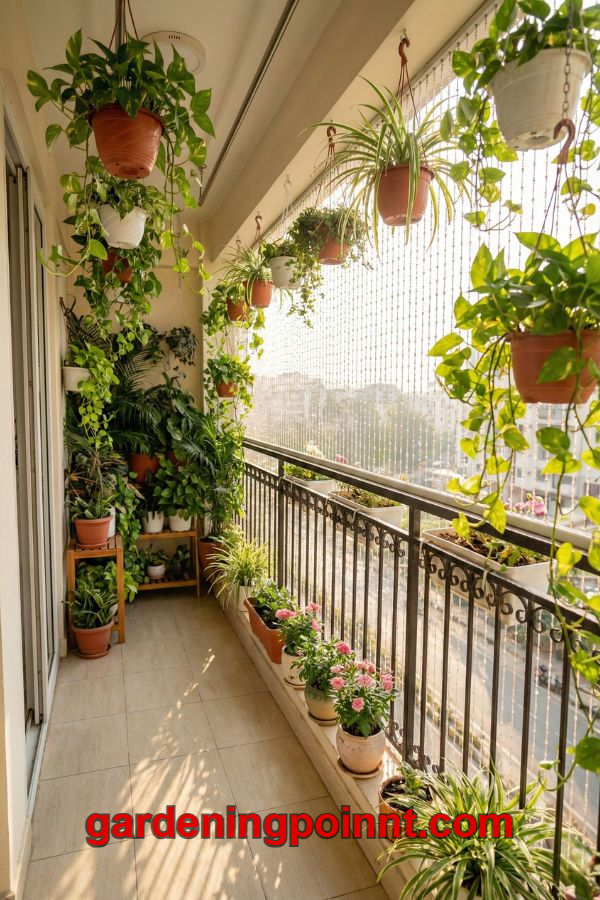
Hanging planters solve two problems simultaneously: they free up floor and surface space, and they use the vertical volume of a room that is otherwise wasted.
Macramé hangers bring warmth and handmade texture, particularly suited to boho, coastal and eclectic interiors. Look for a hanger with a drop length that lets the plant sit roughly at or slightly below eye level rather than at head-bumping height.
Ceiling hooks near windows let a trailing plant catch light while also framing the window itself, similar to a curtain.
Wall-mounted hanging brackets work in rooms without ceiling access, holding a planter out from the wall on a small arm.
Good candidates for hanging display include pothos, string of pearls, string of hearts, spider plant and Boston fern — all naturally trailing or cascading growth habits that look intentional rather than untidy when suspended.
Creating a Plant Wall or Vertical Garden
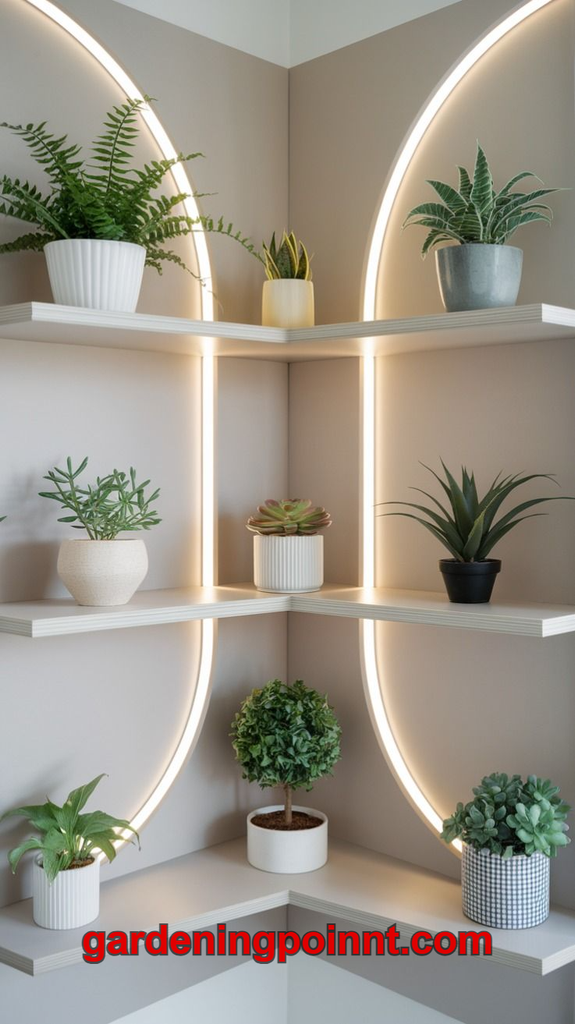
For a genuine statement feature, a plant wall turns an entire vertical surface into living decor.
Modular wall planters are individual pockets or boxes mounted directly to a wall in a grid, each holding a single small plant. This works particularly well in kitchens for herbs or in a home office for a wall of small pothos and peperomia.
Ladder shelving against a wall creates a similar effect with far less installation — simply a leaning wooden ladder shelf loaded with plants of varying sizes at each rung.
A gallery of hanging planters at staggered heights along one wall achieves the visual density of a plant wall without any wall-mounted hardware at all.
Plant walls work best against a plain, uncluttered background — a single wall color with no other art competing for attention.
Room-by-Room House Plants Decor Ideas
Living Room
The living room usually has the most floor space and the highest ceilings, making it the natural home for statement floor plants: a fiddle leaf fig, rubber plant or bird of paradise anchoring an empty corner. Layer in a mid-height plant on a side table near the seating area, and a trailing plant on a bookshelf to complete the height variation.
Bedroom
Keep bedroom plant decor calmer and lower-maintenance, since this is not a room you want to fuss over daily. A snake plant in the corner, a small pothos on a nightstand, and perhaps one hanging plant near the window create a restful, layered look without visual noise.
Kitchen
Herbs on a sunny windowsill double as both decor and function. A hanging shelf above a kitchen window holding small potted herbs in matching terracotta pots looks intentional and gets used. Open shelving in a kitchen also suits a single trailing pothos at one end, breaking up rows of dishware with a touch of green.
Bathroom
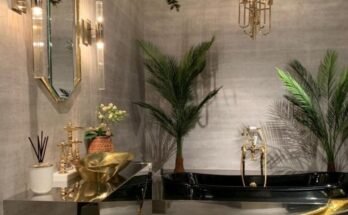
Bathrooms benefit from humidity-loving plants displayed on a windowsill, a corner shelf, or hanging near the shower where steam reaches them. Ferns and calathea look particularly lush against tile and stone surfaces, providing a soft, organic contrast to hard bathroom materials.
Home Office
A desk plant in a small, tidy pot — peperomia, succulent or a compact pothos — adds life without cluttering a workspace. A taller floor plant behind the desk, visible on video calls, has become a small but real trend in home office styling.
Entryway and Hallway
First impressions matter, and a well-placed plant just inside the front door signals warmth immediately. Tough, low-maintenance species like ZZ plant or snake plant suit entryways, which are often dim and drafty. A narrow console table with a single medium plant works better here than a large floor plant that blocks the path.
Matching Plants to Interior Design Styles
Scandinavian
Light wood plant stands, simple ceramic pots in white or muted tones, and structural plants like fiddle leaf fig or snake plant that read as sculptural rather than lush.
Boho
Macramé hangers, woven baskets, trailing plants like pothos and string of pearls, and a deliberately eclectic mix of pot styles and plant shapes.
Minimalist
Fewer plants, chosen carefully. A single large statement plant in a plain concrete or matte ceramic pot does more for a minimalist room than a dozen small ones.
Industrial
Metal planters, concrete pots, and architectural plants such as rubber plant or dracaena that echo the hard materials already in the room.
Traditional
Classic terracotta or brass planters, symmetrical plant placement flanking a fireplace or entryway, and species like peace lily or parlor palm that have been houseplant staples for generations.
Color and Texture Considerations
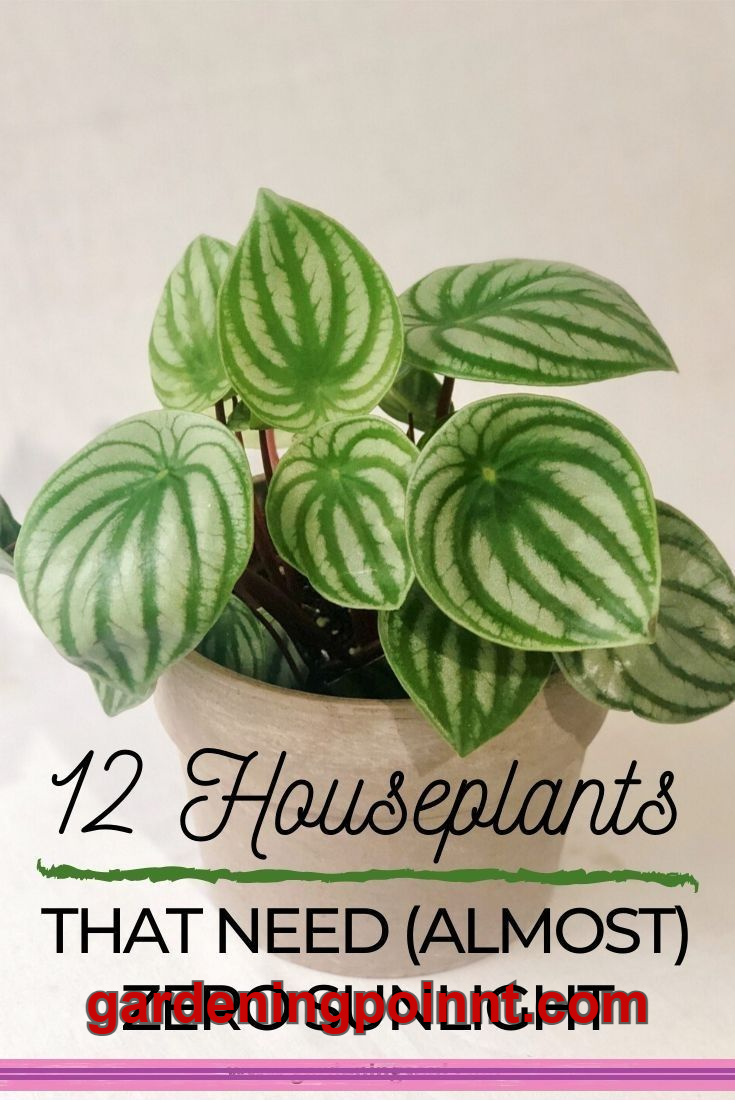
Foliage color is a design tool in its own right. Deep burgundy rubber plants and dark green ZZ plants suit moody, jewel-toned rooms. Variegated plants with cream or yellow patterning brighten dark corners and pair well with light, airy color schemes. Textured foliage — the fuzzy leaves of a peperomia caperata, the ruffled edges of a calathea — adds tactile interest that smooth painted walls and furniture lack.
Consider the pot and the wall behind it together. A dark green plant against a dark wall recedes and creates depth; the same plant against a pale wall becomes a bold silhouette. Neither is wrong, but they create very different moods.
Lighting as a Decor Tool
Good plant decor and good plant health point in the same direction more often than people expect, and lighting is where this overlaps most directly.
Position statement plants near, but not directly in, strong window light so they are lit dramatically at certain times of day, similar to how a piece of art benefits from angled lighting. A small uplight positioned at the base of a large floor plant at night can cast dramatic leaf shadows on a nearby wall or ceiling, turning the plant into an evening lighting feature as well as a daytime decor piece.
Styling With Faux Plants (And When It Makes Sense)
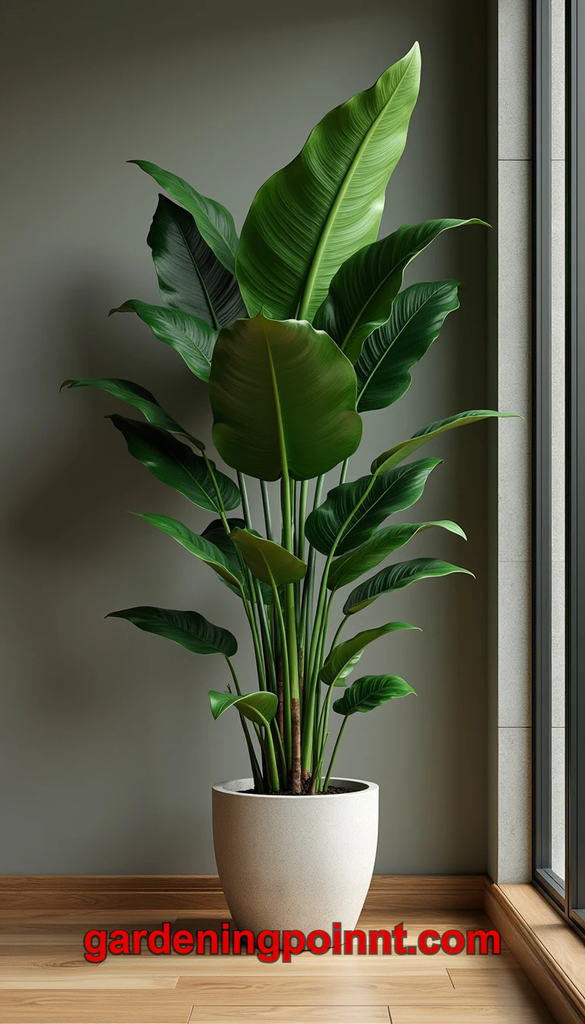
Not every spot in a home suits a living plant, and high-quality faux plants have improved enormously in realism. They make sense in genuinely lightless corners where even the toughest species would eventually decline, in high spots that are difficult to water safely, or for anyone who travels frequently and cannot maintain a watering routine.
The decor principles are identical whether the plant is real or faux: vary height, repeat pot materials, and choose leaf shapes that suit the room’s scale. The one difference worth noting is that mixing real and faux plants in the same visual grouping usually looks better than an entire room of faux greenery, since a few real plants lend authenticity to the whole arrangement.
Seasonal Plant Decor Updates
Plant decor does not need to be static year-round. Swap pot covers seasonally — a warm terracotta or woven basket in autumn and winter, a crisp white or pale ceramic in spring and summer — to refresh a room without buying new furniture. Bring in seasonal flowering plants, such as an orchid or a spring bulb display, as temporary accents alongside a permanent foliage collection. Rotate plants between rooms occasionally, both for their own light exposure and to keep a space feeling refreshed.
Common House Plants Decor Mistakes to Avoid
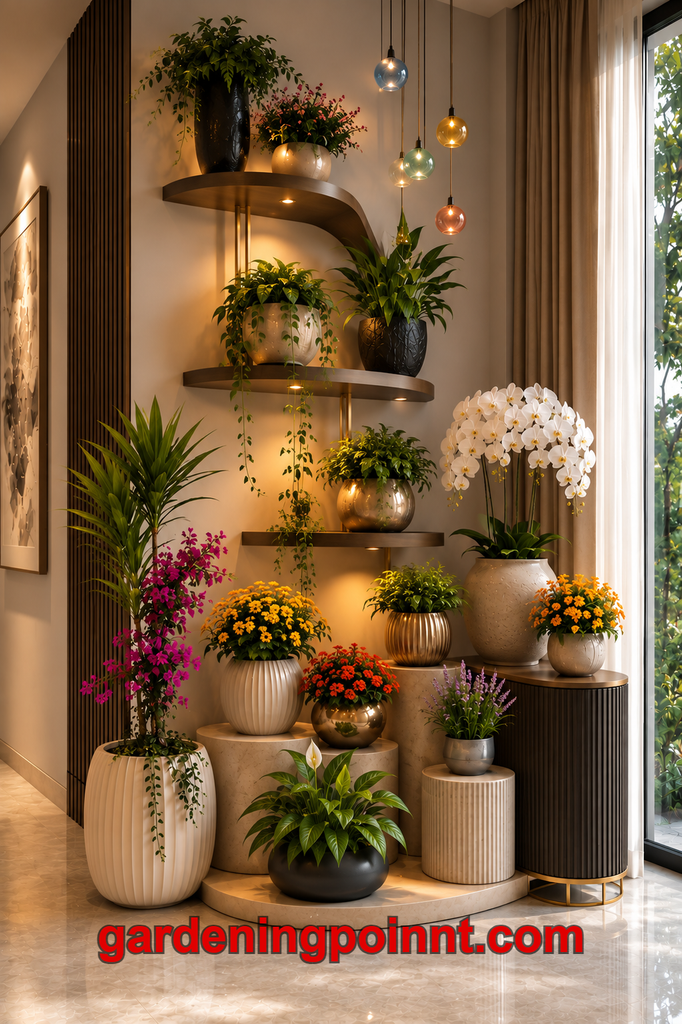
Too many different pot styles at once. A room with a dozen different colors and materials of pot looks chaotic no matter how healthy the plants are. Pick a palette and stick to it.
Ignoring plant health for the sake of looks. A gorgeous ceramic pot with no drainage hole will eventually rot the roots inside it. Always keep the plant in a draining nursery pot within the decorative cover.
Placing everything at the same height. This is the single most common styling mistake. Build in floor, mid and hanging levels deliberately.
Overcrowding a single surface. A shelf or table with too many small pots reads as clutter. Leave breathing room between groupings.
Choosing a plant for its looks alone, ignoring the room’s light. A striking plant that slowly declines because the spot is too dark undermines the decor within a few months. Match the plant to the light before matching it to the aesthetic.
Forgetting scale relative to furniture. A tiny plant on a large empty floor looks stranded. A plant should relate proportionally to the furniture and empty space around it.
Budget-Friendly Plant Decor Ideas
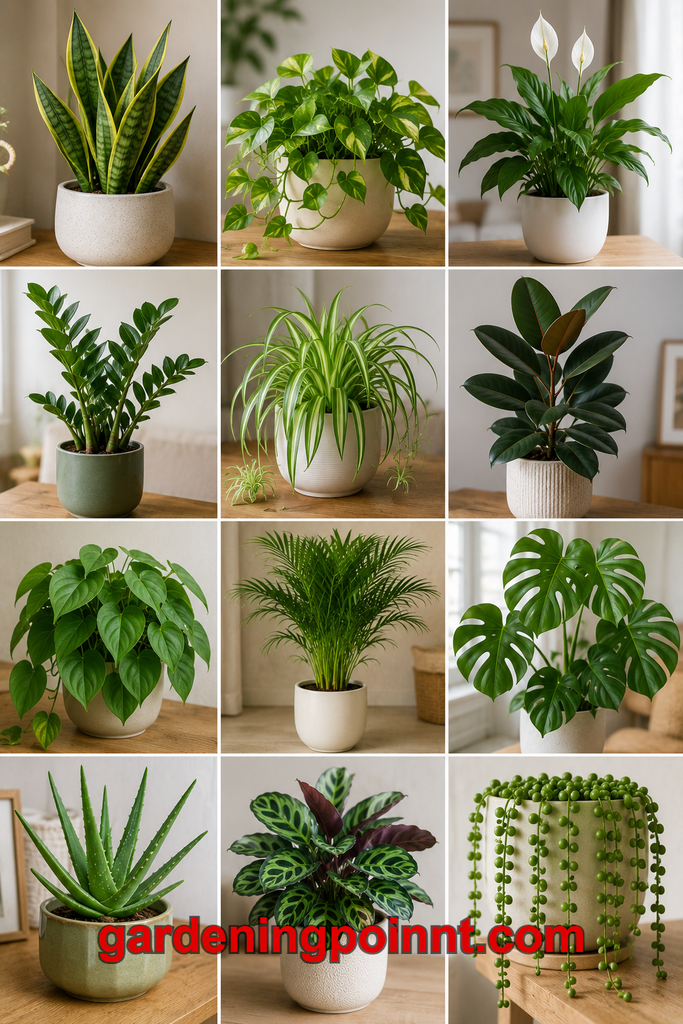
Elevated styling does not require an expensive collection. Repotting an inexpensive plant into a well-chosen pot transforms its presence more than buying a costlier plant in its original plastic nursery pot ever will. Propagating cuttings from a single pothos or spider plant into several small pots creates a matching collection for free. Thrifted vintage pots, painted terracotta, and repurposed containers such as ceramic jugs or vintage tins all work as planters with a drainage hole drilled or a plastic liner tucked inside. A single well-placed large plant often creates more visual impact per dollar than five small scattered ones.
Frequently Asked Questions
How many house plants should I have in one room? There is no fixed number — it depends on room size and your maintenance capacity. A useful starting point is one statement floor plant, two to three mid-height plants, and one or two trailing or hanging plants per average-sized room.
Do plant pots need to match? No, but they should relate. Repeating one or two materials or colors across your collection creates cohesion without requiring identical pots.
What is the best plant for decorating a corner? Tall, structural plants such as fiddle leaf fig, bird of paradise, snake plant or dracaena work best, since their height and shape naturally fill vertical empty space.
Should I repot a plant as soon as I bring it home? Not immediately. Let it acclimate for one to two weeks first. If repotting purely for decor rather than root space, a simple pot-in-pot cachepot method avoids stressing the plant at all.
How do I style plants if I only have small windows? Lean on hanging planters and plant stands positioned as close to the light source as possible, choose low-light-tolerant species, and consider a stylish grow light bulb in an existing lamp to support decor placed farther from the window.
Final Thoughts
House plants decor works best when care and style are treated as one decision rather than two. Choose plants suited to the light you actually have, then style them with the same intention you would apply to furniture: vary the height, repeat a material, group thoughtfully, and give each piece room to be seen. Do that consistently across a home, and even a handful of common, inexpensive plants will look like a deliberately designed indoor garden rather than a random collection of pots.