
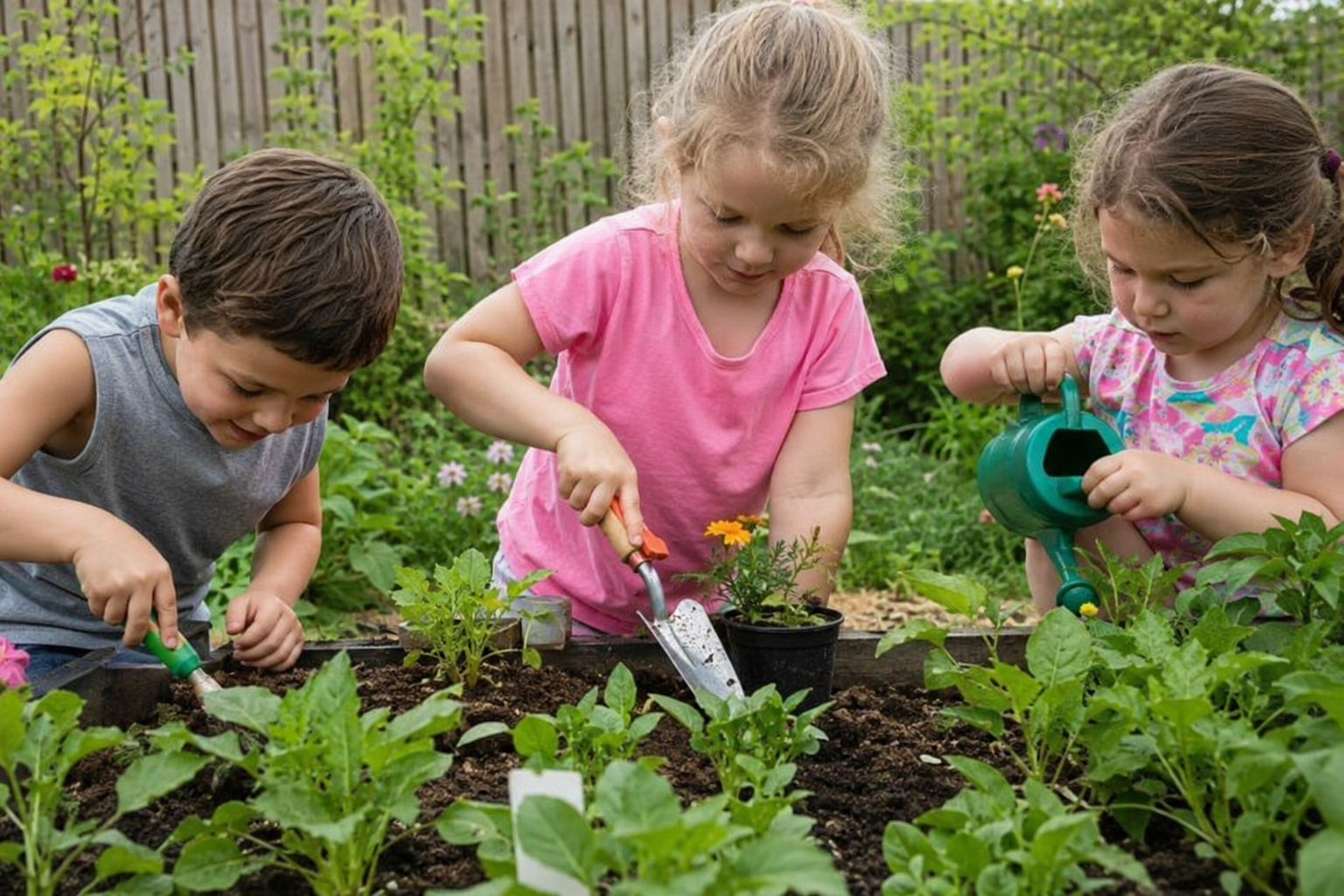
Gardening is one of the simplest ways to help children understand nature and develop healthy habits. In a world where many children spend a lot of time indoors using phones, tablets, computers, and televisions, spending time in a garden can provide a refreshing connection with the natural world. Gardening allows children to touch soil, plant seeds, watch flowers grow, care for vegetables, and observe insects and birds. These simple activities can become valuable learning experiences.
Gardening can also teach children important lessons about healthy living. When children grow vegetables and herbs themselves, they become more interested in fresh foods and may be more willing to taste healthy ingredients. At the same time, gardening encourages physical activity, patience, responsibility, and curiosity. It gives children an opportunity to learn through real experiences rather than only through books or classroom lessons.
Understanding Nature Through Gardening
Children learn best when they can see and experience things directly. Gardening gives them a chance to understand how nature works in a simple and enjoyable way. When a child plants a seed in the soil and sees a small plant appear after several days, the process becomes easier to understand.
Children can learn that plants need sunlight, water, air, nutrients, and proper care to grow. They can also discover that different plants grow at different speeds. Some vegetables may be ready to harvest quickly, while fruit trees and flowers can take much longer.
These experiences help children understand that nature follows its own natural process. They learn that growth cannot always be rushed and that living things need regular care.
Teaching Children Where Food Comes From
One of the most useful benefits of gardening for children is learning where food comes from. Many children see vegetables and fruits only after they have been cleaned, packed, and placed in a supermarket. They may not understand how much work is involved in producing food.
A home garden can change this understanding. Children can plant tomatoes, carrots, lettuce, spinach, mint, or other easy growing plants. They can watch the plants develop and eventually harvest the food.
This experience can make healthy eating more interesting. A child who helps grow a tomato may feel proud when eating it. Gardening creates a connection between children and the food they consume.
Encouraging Healthy Eating Habits
Gardening can play an important role in developing healthy eating habits in children. When children participate in growing vegetables and herbs, they become familiar with fresh foods from an early age.
Some children may avoid vegetables because they are unfamiliar with them. However, growing vegetables can make them more curious. They can touch the leaves, smell herbs, observe the colors, and learn how each plant develops.
Parents can involve children in simple activities such as picking fresh herbs for a meal or washing vegetables after harvesting. These small experiences can encourage children to appreciate fresh and nutritious foods.
A garden does not guarantee that every child will suddenly enjoy vegetables, but it can create a positive environment where healthy foods become more familiar and interesting.
Developing a Sense of Responsibility
Gardening teaches children that living things depend on regular care. A plant cannot grow properly if it is completely ignored. Children can learn responsibility by helping with simple gardening tasks.
Depending on their age, children can water plants, remove dry leaves, add compost, place seeds in soil, or help collect vegetables. These tasks teach them that their actions have results.
When children forget to water a plant and notice that it becomes weak, they can understand the importance of consistency. When they take care of a plant and see it grow, they experience the satisfaction that comes from responsible behavior.
These lessons can also help children become more responsible in other parts of life.
Learning About the Life Cycle of Plants
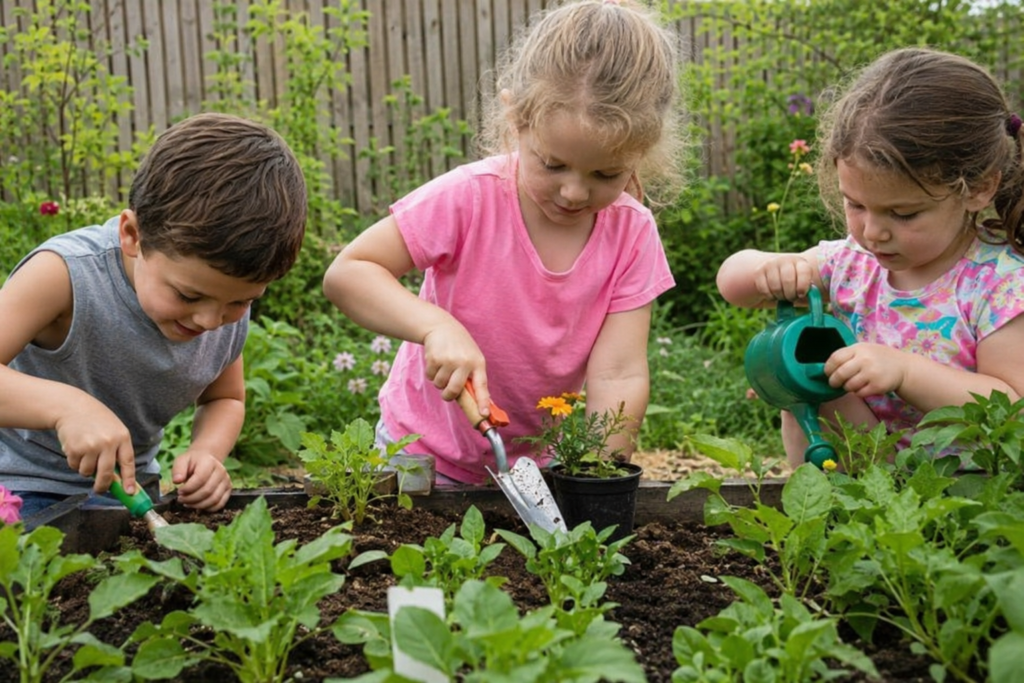
A garden is a natural classroom for teaching children about plant life cycles. Children can learn how a seed becomes a seedling, how a plant develops leaves and flowers, and how some plants eventually produce fruits or seeds.
This process can be much more meaningful when children observe it themselves. They can keep a simple gardening journal and record changes in the plants each week.
For example, children can draw the plant when the seed is first planted and then draw it again after one week, two weeks, and one month. This activity combines science, observation, writing, and creativity.
Discovering Insects and Small Animals
Gardening also introduces children to insects and other small creatures. Bees, butterflies, earthworms, ladybugs, spiders, and many other creatures may visit or live around a garden.
Children can learn that insects are part of the natural environment and that many of them have important roles. Bees and butterflies can help with pollination, while earthworms can contribute to healthy soil.
Instead of simply being afraid of every insect, children can learn to observe them safely and understand their place in nature. This can encourage respect for living creatures and create greater interest in the environment.
Encouraging Physical Activity
Gardening is also a form of physical activity. Digging soil, carrying small watering cans, planting seeds, pulling weeds, and moving around the garden all require movement.
Children need regular physical activity for healthy development. Gardening can make movement feel like play rather than exercise.
A short gardening session can encourage children to spend less time sitting indoors. It can also provide an opportunity for parents and children to work together while staying active.
Teaching Patience Through Gardening
Modern life often gives children quick results. They can watch videos instantly, play games immediately, and receive information within seconds. Gardening teaches a different lesson.
Plants take time to grow. A seed does not become a mature plant overnight. Children have to wait, observe, and continue caring for the plant.
This can teach patience in a natural way. Children begin to understand that some valuable results require time and consistent effort. This lesson can be useful in school, hobbies, sports, and many other areas of life.
Building a Stronger Connection With Nature
Children who spend time gardening can develop a stronger connection with nature. They begin to notice changes in weather, seasons, soil, sunlight, and plant growth.
They may become more interested in birds, insects, flowers, trees, and other natural features around them. This connection can encourage children to care more about protecting the environment.
Simple habits such as saving water, avoiding unnecessary waste, caring for plants, and protecting useful insects can become easier to understand when children experience nature directly.
Supporting Emotional Well Being
Gardening can also create a peaceful environment for children. Spending time outdoors and focusing on simple activities can provide a break from busy schedules and digital screens.
Children can enjoy the feeling of soil in their hands, the smell of plants, the sound of birds, and the sight of flowers. These experiences can help create a calm and enjoyable routine.
Gardening also gives children something they can care for and watch grow. Seeing progress in a garden can create a sense of achievement and confidence.
Making Gardening Fun for Children
Parents do not need a large garden to introduce children to gardening. A few pots on a balcony, terrace, window area, or small outdoor space can be enough.
It is helpful to start with plants that are easy to grow. Herbs, leafy vegetables, tomatoes, beans, and some flowers can be good choices depending on the local climate.
Children should also be given simple responsibilities that match their age. Younger children can help with watering and planting, while older children can learn about composting, soil preparation, and planning a small garden.
The main goal should be enjoyment and learning rather than perfection. Plants may sometimes fail to grow, leaves may become damaged, and insects may appear. These experiences are also part of learning.
Gardening as a Family Learning Activity
Gardening can bring families together. Parents can share their knowledge while children ask questions and explore the garden.
Families can create a small weekend gardening routine. They can check plants, water them, remove unwanted growth, harvest vegetables, and discuss what has changed during the week.
This creates quality family time while teaching children useful knowledge. It also gives parents an opportunity to model healthy habits and environmental responsibility.
Conclusion
Gardening can teach children about nature and healthy living in a practical and enjoyable way. It helps them understand how plants grow, where food comes from, and why nature needs care and protection. At the same time, gardening encourages healthy eating, physical activity, patience, responsibility, curiosity, and appreciation for the environment.
Children do not need a large garden to benefit from these experiences. Even a few plants in containers can become a valuable learning opportunity. When children are allowed to plant, water, observe, and harvest, they develop a deeper understanding of the natural world.
For parents looking for a simple way to introduce healthy habits and nature education, gardening can be an excellent choice. It turns everyday outdoor activities into meaningful lessons and helps children discover that caring for plants can also teach them how to care for themselves and the world around them.